



When my wife and I moved to Beijing in 2019, we packed wrong. So wrong!
My first winter there was brutal. I had the wrong jacket, the wrong shoes, and I had the wrong VPN setup before I flew (I thought a VPN is a VPN, right?). Big mistake, and I had to wait days to get a local SIM card.
I lived in China for a total of 3 years. Two years in Beijing, one in Shanghai. And packing for China is not really like packing for any other country.
Most packing guides online really miss the important stuff. They say, “Bring a jacket” and “Pack comfortable shoes.” Thanks!… But they skip things that really matter.
Like the fact that public toilets in Beijing hutongs often have no toilet paper. Or that the air quality on some winter days really requires an N95 mask. Or you need to have your hotel address in Chinese characters on your phone to show to the driver. Or the power bank you bring needs a specific certification.
So this blog post has basically been 3 years in the making. I’ll cover the essentials and the China-specific stuff you really need to know. Plus, the differences between Beijing and Shanghai, packing by season, and family travel with kids, what NOT to bring, and more.
Short on time?
- Best VPN for China: Astrill, set up before you fly
- Best translation app: Pleco (free, offline, with OCR camera)
- Best payment apps: Alipay AND WeChat Pay (set up both before flying)
- Best air quality app: Air Matters (real-time AQI per neighborhood)
- Best maps: Baidu Maps. Google Maps doesn’t work well even with a VPN.
- Best taxi app: DiDi (international version, works on foreign cards)
- Carry-on weight limit for China domestic flights: 5 kg, way less than the US standard
- Aspirin/Paracetamol: Sometimes hard to buy at Chinese drugstores (they sometimes refuse foreign passports). Bring a strip of your own aspirin/paracetamol.
- Cash to bring: Around 1000-2000 RMB ($140-280 USD) as a backup
- Best months for Beijing: September and October
- Best months for Shanghai: October and November
- Universal adapter you need: Multi-region with Type A, C, and I
- Best travel insurance: SafetyWing. I would really recommend it.
Why Packing Is Different for China
Before we dive in (sorry for the long intro!!) I want to mention this first:
I can imagine a lot of travelers might think, “I’ll just buy it in China, they’ve got everything there!” And in theory, that’s true. China has everything. But the way Chinese people shop is really different.
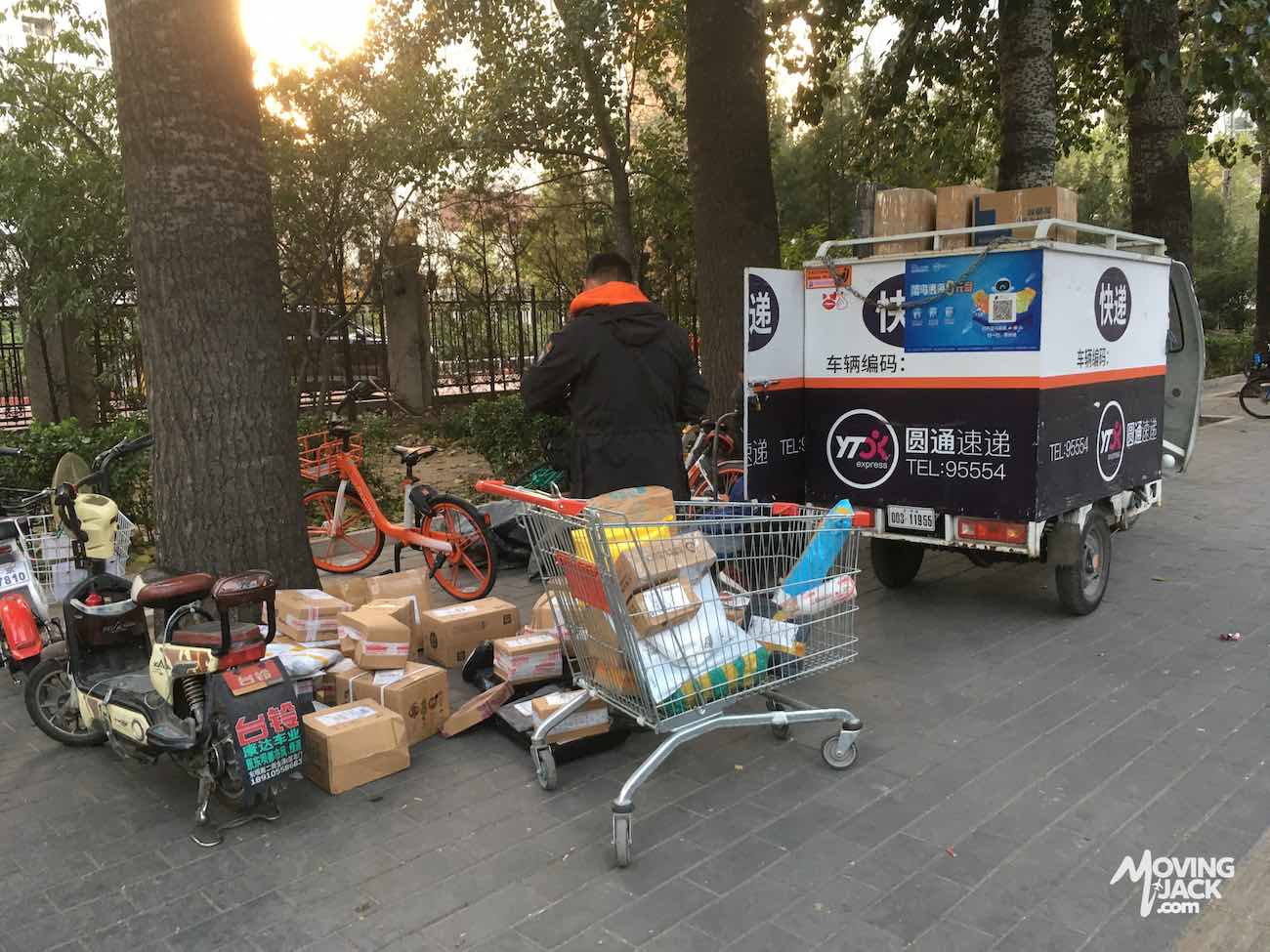
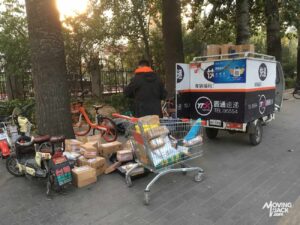
In China, almost everything happens online through Taobao, JD, or Meituan. Need an SD card? You order it on Taobao, and it arrives in a few hours. Need underwear, sunscreen, batteries, or a pen? Same thing, you order it online, and it comes to your door.
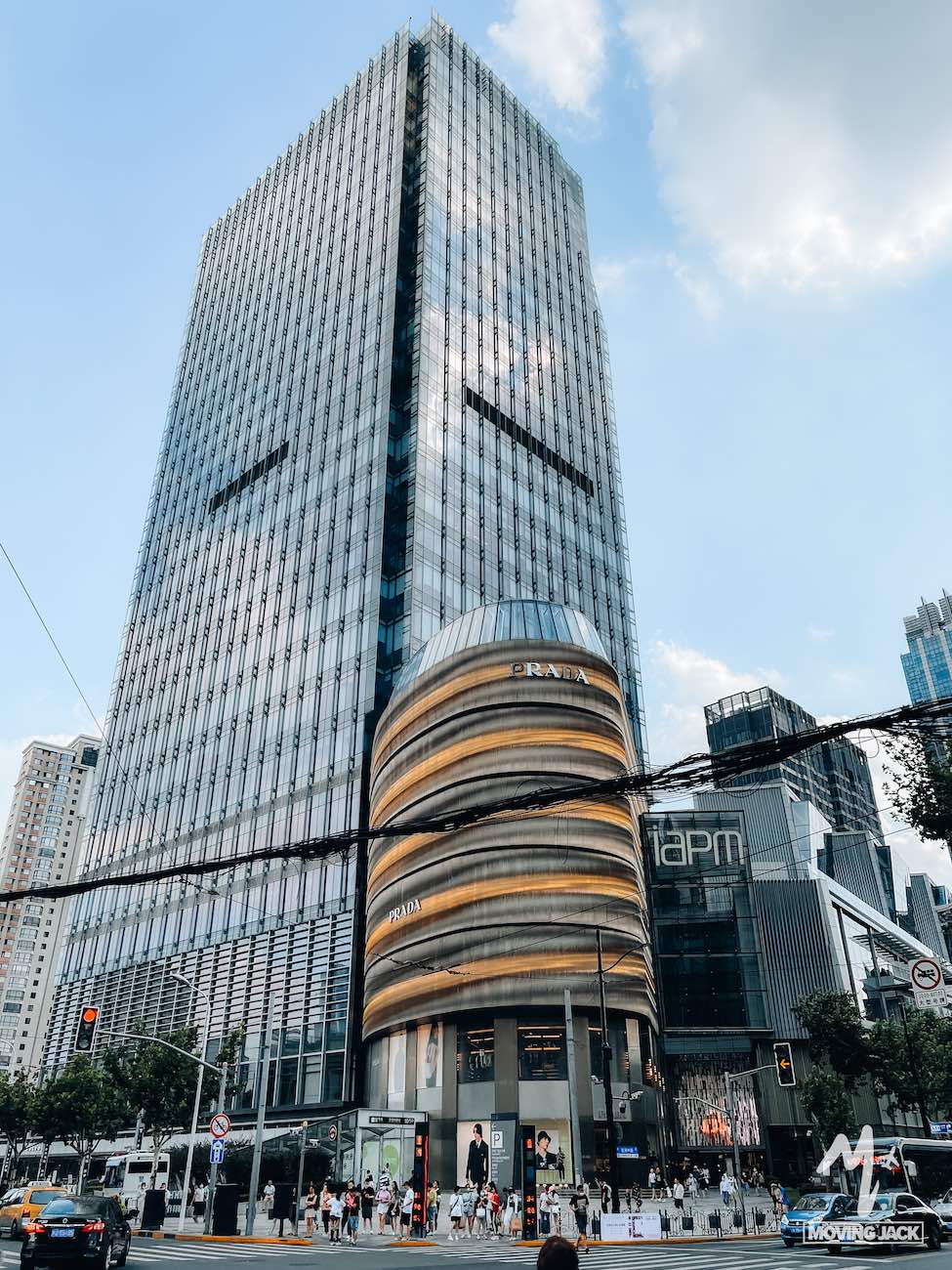
Physical malls do exist, but most are for luxury brands like Prada, Louis Vuitton, Gucci, Cartier, Apple, and so on, like you can see on the left. Not really the best place to grab a USB cable or a pair of socks!
So, as a tourist or short-term traveler, this is a real problem!
You don’t have a Chinese delivery address (yet), you can’t easily pay on Taobao with a foreign card, and the small everyday convenience stores mostly sell snacks and drinks, not really practical items (some do, but not all)
Where to find basic stuff if you do need to buy in China:
- Watsons (drugstore chain) for basic toiletries, sunscreen, makeup remover
- Carrefour or RT-Mart (hypermarkets, big ones in most cities) for kitchen stuff, snacks, basic clothing
- Uniqlo, H&M, Zara for clothing in big cities
- Decathlon is great for sports gear, outdoor stuff, and t-shirts
- MINISO for cheap accessories, phone cables, and basic kitchen tools
The lesson I learned from living there is to just bring the basics with you. An SD card costs maybe $5 from Amazon, but finding the right size and class in China can take you a whole afternoon of walking around looking for a camera shop. Pens, batteries, basic underwear, sunscreen, contact lens solution, deodorant… all easier to just pack from home than hunt for in China!
Btw, in China it's not easy to find beard trimmers, hair gel, and men's deodorant, so bring those as well!
If you forgot something really important, you could ask the hotel concierge. They can often arrange a Taobao order on their account for a small service fee.
Anyway, here’s the full packing list of everything that’s smart to take to China. Let’s get into it!
What to Pack for China
Before we even talk about clothes and shoes, these are the China travel essentials;
1. Best VPN for China
This is the most important sentence in this entire post. The Great Firewall blocks Google, Dropbox, TikTok (They use Douyin), WhatsApp, Instagram, Facebook, YouTube, X, Gmail, basically every Western app you use daily. And here is the catch. You cannot download a VPN once you arrive. The app stores don’t show them inside China.
I used ExpressVPN and Astrill for my whole time in China. It really was the most reliable one for me. Some friends used ExpressVPN with mixed results. Astrill is the one my local Chinese friends use daily.
Set it up on your phone AND your laptop before you fly. Pay for at least a month or two. It really is the best money you’ll spend on this trip.
I once had a friend who downloaded a VPN, went to China, and then looked for “China” in the VPN app. That’s not how a VPN works! The countries you see in the app are the countries you can connect TO. So within China, you can basically select any country; usually, the US has the fastest connection. And then, on the internet in China, it seems like this person is in the US, and so all apps just work like they would in the US.
2. Best Payment Apps in China
China is basically cashless now. Street vendors, taxis, restaurants, museums, everything works through QR codes. The good news is that, since 2023, it has really become much easier for foreigners. You can link an international credit card to both apps without too much trouble.
I used both Alipay and WeChat Pay. Alipay is usually easier for foreign cards and most international payments. WeChat Pay is more for chatting and is more integrated with daily life. Some smaller vendors only accept one or the other.
Set up both before you go! Download the apps, link your card, and follow the in-app verification. There are good guides online for the exact steps because they update quite often.
3. Do You Need Cash in China?
Even though China is basically cashless, you really want some RMB on you. Some small vendors in older areas don’t always accept foreign-linked Alipay.
I would recommend bringing around 1000-2000 RMB in cash (around $140-280 USD). Or just take it out at an ATM when you arrive; there are plenty in the cities or at the airports.
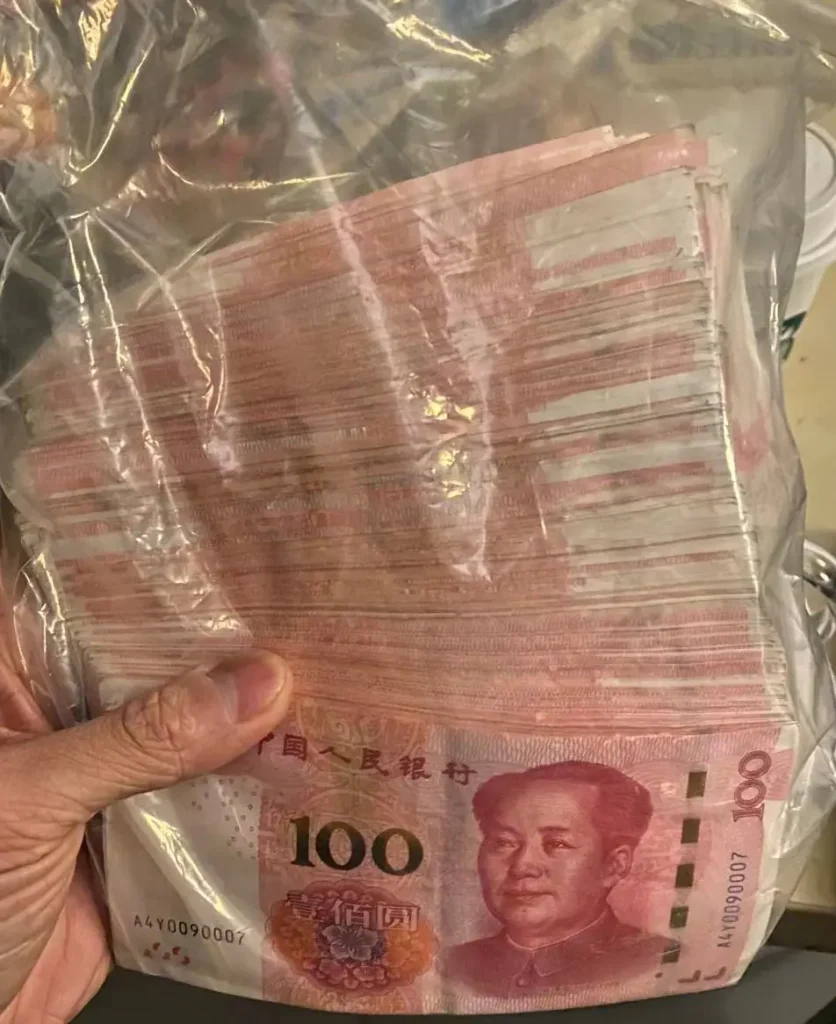
Foreign cards on Alipay have transaction and annual limits. The exact numbers have changed a few times since 2023. Most travelers never reach the limits on day-to-day spending. But for some expensive purchases (luxury hotels, high-end shopping), don’t assume your foreign card will be fine. Have a backup payment option or some cash, just in case.
ATMs: Even though China is almost cashless, there are still plenty of ATMs around in the cities where you can get cash with your foreign card. Make sure you’ve set your card to “Worldwide,” so it works.
4. the 5 Kg Domestic Carry on Rule
Most Chinese domestic airlines have a 5 kg carry-on limit on paper, way less than US standards. I was on about 80 flights in China in 3 years, and was never weighed, but I know some travelers who got caught. Pack reasonably, and you’re probably fine, but don’t bring an obviously heavy carry-on if you can avoid it.
5. Toilets in China
In malls, the toilets are actually super clean. But in Beijing, in the hutongs, it’s different. It’s smart to bring your own toilet paper or tissues with you.
I had a few moments in the hutong areas around the Drum Tower in Beijing. Public toilets are everywhere, which is great. But they don’t always have toilet paper or soap. Some are squat toilets too…, which is totally fine, but might be a surprise if you’re not ready for it!
So just pack a few small tissue packs in your daypack, and you’re set for local Beijing.
Btw, if you're in a restaurant in a mall and need to go to the toilet, there usually isn't one inside the restaurant. Everyone uses the mall's restrooms, so you'll likely have to walk out of the restaurants and go there, but that's what everyone does.
6. Best Translation App for China: Pleco
This is not a packing item, but please, please install Pleco on your phone before you go. It is the offline Chinese dictionary that almost every expat I know uses. You point your camera at Chinese text, and it translates on the spot. That function saved me so many times. In restaurants, train stations, and on street signs. It’s free, it works offline, and it’s just way better than Google Translate for Chinese.
Also, WeChat is great at translating images, like menus at restaurants, so you can just point at it and say “zhege”! (This one!). It’s a bit of a local joke that that’s one of the few words foreigners know 😉
7. Best Apps to Use in China
A few apps I use daily:
- DiDi, the Chinese Uber. The international version works on foreign cards.
- For food and reviews, Meituan / Dianping is the Chinese Yelp plus delivery
- Baidu Maps, because Google Maps doesn’t work in China. Even with VPN, it’s often inaccurate.
- Trip.com / Ctrip for trains and flights inside China
- Real-time air quality with Air Matters
- Pleco for offline Chinese translation
- Astrill VPN
Another great app is Maps.me, you can pre-download cities so you don’t need an internet connection, just GPS (which doesn’t use internet). It’s not perfect but chances of getting lost are definitely lower with the app 😉
8. Travel Insurance for China
I rarely talk about insurance in posts, but for China, it’s worth thinking about. We used SafetyWing for our trips.
Healthcare is of really good quality in the big cities, but international hospitals can be expensive. And the one thing that’s perhaps a bit typical of China is that local flights often get delayed or even canceled. It happens to me quite a few times. Luckily, these were all flights that were paid for by me because I got booked at clubs to perform as a DJ. But if I had to pay for them myself, arranging new tickets or hotels would have cost me a lot.
These delays happen because sometimes there are typhoons or big storms, so out of precaution, they have to delay flights. It’s not that the infrastructure isn’t good; it’s just out of precaution.
One time, I had to stay two extra days in Shenzhen because of a typhoon risk.
Most SafetyWing insurance plans include this in their coverage, but please check the policy carefully, as you would with any insurance.
China Travel Essentials
These are the China travel essentials I would pack for any trip:
Essential Tech and Documents to Pack for China
- A universal travel adapter with multiple USB-C ports. China uses Type A and Type I outlets. Most newer hotels also have Type C.
- A portable power bank for long days of exploring. I would suggest at least 10,000 mAh. Just check airline rules. Batteries can not be in your checked-in luggage, and nowadays it’s also not allowed to keep them in the overhead bin in your carry-on. They need to be in a bag in front of your seat.
- Your VPN is already installed on your phone and laptop.
- A passport with at least 6 months’ validity plus a visa if your country requires one. The visa rules keep changing; check the latest for your nationality.
- A few printed copies of hotel addresses in Chinese characters to show taxi drivers. DiDi handles this in the app, but if you take a regular taxi or get lost, having it on paper really helps. This is especially handy at the airport because it’s best to get a taxi from the taxi stand, but you’ll need to show the address in Chinese characters to the driver. Btw, don’t translate the hotel’s address in Google Translate; try to find the official Chinese address on the hotel’s website or on Booking.com.
- Phone charging cable plus a backup.
- An eSIM activated before you fly (Airalo is easy and works great in my experience.)
Essential Clothing for China
- Comfortable walking shoes. You’ll easily walk 15,000-20,000 steps a day in China! Spaces are huge, crossroads are wide, you’ll walk a lot.
- Pack light, breathable layers because the weather can change throughout the day. Indoor temperatures vary a lot from one place to the next.
- A small foldable umbrella that fits in your bag. Rain or sun, you’ll use it.
- Bring modest clothing for temples. Covered shoulders and knees. Most temples require this, especially the older ones.
Health and Hygiene Items to Pack for China
- Travel-size hand sanitizer, because public bathrooms don’t always have soap
- A few packs of tissues for the bathroom situation I mentioned
- Any prescription meds in original packaging, plus a note from your doctor for sensitive items. Some meds available in the US are restricted in China.
- Basic first aid stuff like band-aids, painkillers, and anti-diarrhea pills. The first time you eat real Sichuan food, you might need them…
- A reusable water bottle. Tap water is not drinkable, but every hotel and many public places have hot water dispensers. Chinese people love hot water. An insulated bottle works really well for this.
- Wet wipes for sweaty summer days or sticky train rides
- Lip balm with SPF because the cold, dry air in Beijing’s winter destroys lips
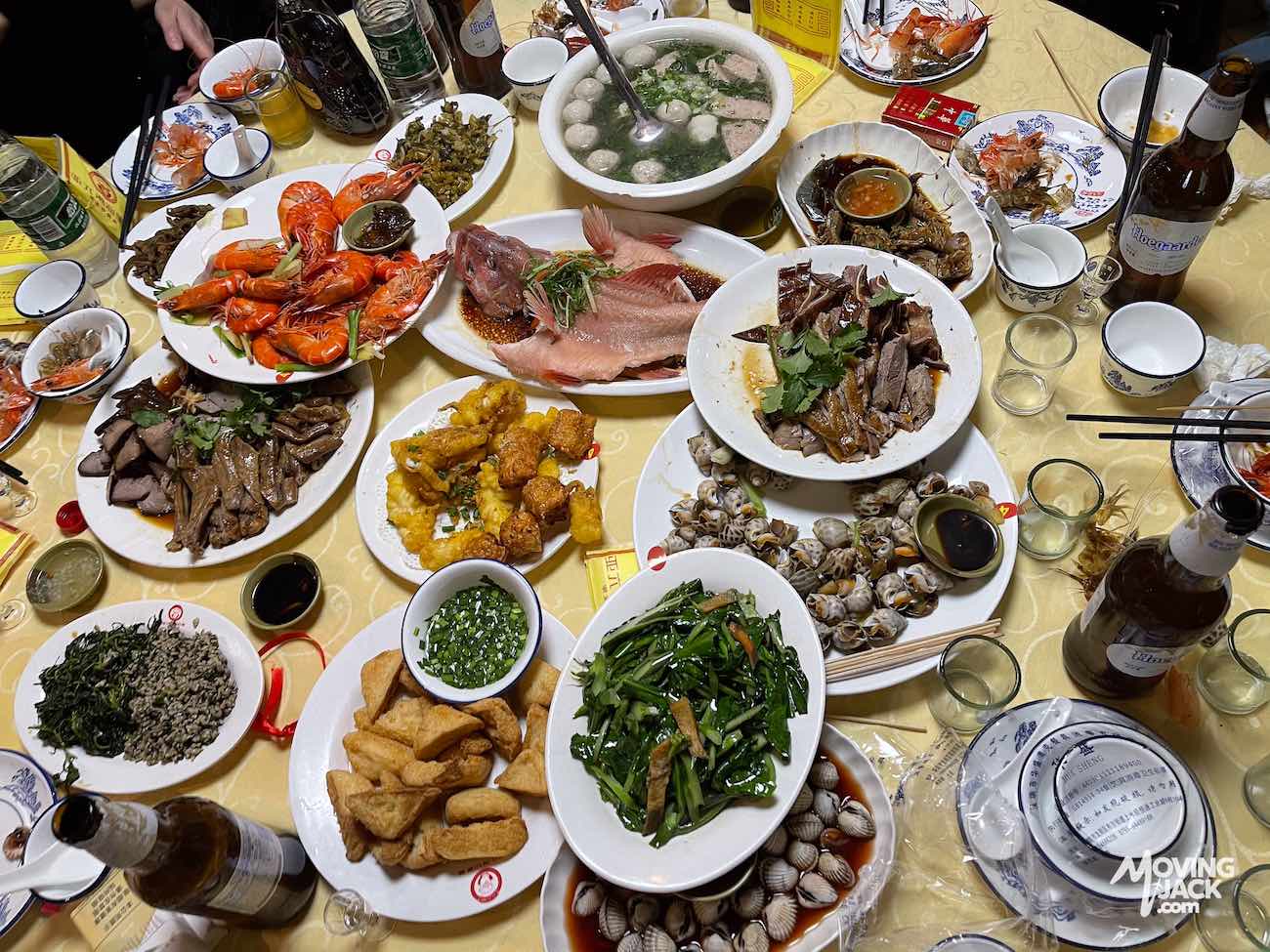
If you decide to go really local you’ll encounter lots of unfamiliar food, but make sure you’re up for it and bring some meds just in case your stomach can’t handle it.
Best Luggage and Bags for a China Trip
- A 40-45L carry-on backpack as your main bag for shorter trips
- A smaller daypack for daily exploring. Keep it crossbody or front-facing in crowded metros.
- A few packing cubes to keep things organized. My wife loves these.
- A secure money pouch for your passport and main cards
Best Electronics to Pack for China
The best electronics to pack for China deserve their own section. Some items help you a lot, others just get in the way.
Phone Setup for China
- Make sure your phone is unlocked for use with a local SIM if needed.
- eSIM activated for instant connectivity on arrival. Airalo’s China plan routes through Hong Kong, which actually means you bypass the firewall on the eSIM data (bonus).
- A Chinese SIM if you stay longer than a month. China Mobile is the most reliable.
- Backup phone if you can. Useful if your main phone has issues.
Best Laptop and Tablet Setup for China Travel
- Laptop with VPN already installed and tested.
- Tablet for long flights and trains. The high-speed train rides between cities are 4-12 hours, and having a tablet with downloaded shows is great.
- Bluetooth keyboard if you’re a digital nomad and want to work from cafes
- Sleeve or case to protect from the inevitable bumps in crowded metros
Cameras and Photography Gear for China
- A smartphone camera is usually enough for most travelers
- Mirrorless or DSLR if you’re serious about photography. China is one of the most photogenic countries I’ve ever visited.
- Spare batteries, especially for winter. Cold drains batteries fast in Beijing.
- A few extra SD cards. China is surprisingly hard to find SD cards in the size and class you want.
- Lightweight tripod for night photography of cityscapes
Audio and Headphones for China Travel
- Noise-canceling headphones for the flight and train rides. China Eastern and Air China seats are not the most comfortable; headphones help a lot.
- A wired backup pair because some Chinese airlines don’t allow Bluetooth headphones during takeoff and landing
- Bluetooth speaker, if you like music while exploring (optional)
Power Banks and Charging for China
- 20,000 mAh portable battery. As of 2025, China requires a 3C certification mark on power banks for domestic flights. Most Western brands don’t have this. Buy a Chinese 3C-certified one when you arrive, or risk it being confiscated.
- Universal adapter with multiple ports
- USB-C fast charger for newer phones
Luckily, most restaurants or malls have chargers available. You can ask if they can charge your phone for a bit while you get a drink. I’ve done this lots of times.
What to Pack for China for Different Trip Lengths
What to pack for a China trip depends quite a bit on how long you’re going for. The items to bring for a 1-week trip look different from a 2-week or 3-week itinerary. Here’s the breakdown by trip length.
What to Pack for a Week in China
A week is enough for one or two cities (Beijing + Shanghai, or Beijing only with the Great Wall).
- 1 carry-on backpack (40-45L) usually fits everything
- 4-5 tops, 2 pairs of pants
- 1 pair of walking shoes plus 1 backup (sandals or flats)
- All the universal essentials
- Season-specific layers
Don’t overpack. China is hot in summer and cold in winter, so you’ll be wearing the same outer layer for the whole trip anyway. Laundry at hotels works for a week if needed. Usually 50-100 RMB per item, so expensive but doable.
What to Pack for Two Weeks in China
Two weeks lets you cover Beijing, Shanghai, and one more city like Xi’an, Chengdu, or Guilin.
- Same as a week, but add 2-3 more tops and 1 more bottom
- A foldable duffel inside your main bag for souvenirs
- Plan for at least one laundry stop mid-trip
- More toiletries (or buy in China, drugstores are everywhere)
What to Pack for Three Weeks or Longer
A long China trip means you’ll really need:
- Laundry plan baked in (do laundry every 5-7 days)
- 2 pairs of shoes (one main, one backup)
- More variety in clothes because you’ll get tired of the same outfits
- Maybe a small folded extra bag for souvenirs
- A bigger first aid kit because longer trips mean more chances of small issues
What to Pack for China as a Female Traveler
This section covers what to pack for China as a female traveler.
Safety Items for Solo Female Travelers in China
Having lived together with my wife in China for 2 years, I know what to bring and what not to bring in China as a female traveler.
First of all, China is really safe for women in big cities. Violent crime is super rare, harassment is uncommon, and the metro and transport feel safe even late at night. That said:
- A crossbody bag that closes properly. Pickpocketing in crowded tourist areas is the main concern.
- Small whistle on your keychain. Probably won’t need it, but useful for peace of mind.
What to Wear in China as a Woman
China is generally fine with whatever you wear, but a few things:
- Modest clothing for temples. Cover your shoulders and knees in religious sites.
- Beachwear can be more conservative than you think. One-piece swimsuits are more common at hotel pools.
- Layers because indoor AC is freezing, and outdoor heat is extreme in summer
Female Health and Hygiene Items to Pack
Some things are harder to find in China:
- Tampons are sometimes hard to find. Pads are everywhere. Bring tampons from home if you prefer them.
- Western-style deodorant is very limited. Bring extra.
- Birth control pills in your usual brand may not be available. Bring enough for the whole trip.
- A period tracking app that works offline (most do, but verify before you fly)
- Wet wipes and hand sanitizer for the public bathroom situation. Make sure the products are non-flammable (don’t have the little fire symbol on them), or they might be confiscated at the airport.
- As I mentioned earlier, bring your own aspirin and paracetamol. They do have it at drugstores, but you’ll need to show your passport before you can buy it, and it happened to me that they wouldn’t accept my foreign passport, so I was not able to buy it. So if you sometimes need aspirin, please bring a strip.
Beauty and Skincare for China
- High SPF sunscreen (50+). Asian sunscreens often have whitening agents, which you may not want.
- Hair products, if you have specific needs. Chinese hair products are made for Asian hair, which may not work for everyone.
- Razors and blades, because the local ones are not always of great quality and often hard to find.
I traveled with my wife in China for years, and these are the items she said really mattered.
What to Pack for China with Kids
I went to China both before and after having our son. What to pack for China with kids is really a different conversation from solo travel. Traveling with a kid in China is really doable, but you need to think a bit ahead.
Traveling to China with Kids: What Works Well
- Chinese people LOVE kids. Strangers will smile, wave, and sometimes try to give your kid candy. It’s really sweet.
- Restaurants are very kid-friendly. Most have child seats, and the staff is patient.
- Metro and trains are clean and stroller accessible (for the most part).
- For diapers and baby food, big cities have you covered. Try Carrefour, RT-Mart, or City Shop.
- Crime is really low, so you feel safe with kids in tow.
Traveling to China with Kids: What’s Harder
- Air pollution is a real concern for small kids. On bad days, keep them inside or use a kid-sized pollution mask. They have those at convenience stores.
- Indoor smoking is still a thing. Many smaller restaurants allow it, so pick carefully.
- Some attractions are not stroller-friendly. The Great Wall is the obvious one, plus parts of the Hutong area.
- Diapers in China are sometimes smaller than those in the US. Bring enough diapers.
What to Pack for China with Kids: The Specific Items
- Kid-sized pollution mask for bad air days (especially Beijing)
- A baby carrier or hiking carrier
- Pack diapers from home for the first week
- Familiar snacks, because not every kid likes Chinese food right away
- Kids’ tablet with offline shows downloaded for long train rides
- Kid headphones are a real lifesaver on long flights
- Sunscreen designed for kids (the Chinese options are limited)
- Wet bag for diaper situations or accidents
Is China Safe with Kids?
China is one of the safest countries for kids I’ve been to. Crime is really low, people are kind, and the public infrastructure is good in big cities. Toilets, restaurants, transport, all fine. Don’t let stories scare you off.
One thing to look out for is that almost all vehicles run on electricity, so they make almost no sound. If you're not used to this, please just be mindful of this.

Tip: Most malls in China have huge indoor playgrounds for kids in the center!

What to Pack for China by Season
What to pack for China by season really matters because the weather changes dramatically between months. The items to bring for a March trip look almost nothing like what you’d take in July. Here’s the seasonal breakdown for each part of the year.
What to Pack for China in Spring
What to pack for China in spring depends a lot on where you’re going. The most variable season. Beijing might still be cold and dusty in March, while Shanghai is rainy and warming up. By May, both cities are comfortable.
What to pack:
- Light layers you can add or remove
- A real rain jacket (not just water resistant)
- A foldable umbrella for the daily showers
- Closed-toe walking shoes
- Light scarf for cool evenings
- Sunglasses (Beijing dust, Shanghai sun glare)
- Mask if visiting Beijing in March-April
What to Pack for China in March
Beijing is still cold and dusty, and it sometimes hits 0°C. Shanghai is rainy with 8-15°C. Pack like late winter.
What to Pack for China in April
Beijing dust storm peak. Shanghai blooms beautifully, but expect rain. Pack rain gear.
What to Pack for China in May
Both cities are comfortable, 15-25°C. The best month if you don’t like extremes.
What to Pack for China in Summer
What to pack for China in summer is all about handling humidity and heat. Hot and humid everywhere except the far north. Cities feel like saunas, but indoors or in the subway, the AC can be cold.
What to pack:
- Breathable shirts
- Loose pants or shorts
- A light layer for indoor AC
- Quickly dry everything
- Sunscreen SPF 50+
- A small towel for sweat
- Wet wipes
- Mosquito repellent
- Sandals for the heat
What to Pack for China in June
Rain season in Shanghai, but usually short showers. Beijing starts getting hot. 25-32°C in both cities.
What to Pack for China in July
Peak humidity. Shanghai can be 35°C with 90%+ humidity. Beijing is drier with temperatures at 33°C.
What to Pack for China in August
Hot, sticky, occasional typhoons in Shanghai. Beijing dust is mostly gone, but air quality is variable.
What to Pack for China in Fall
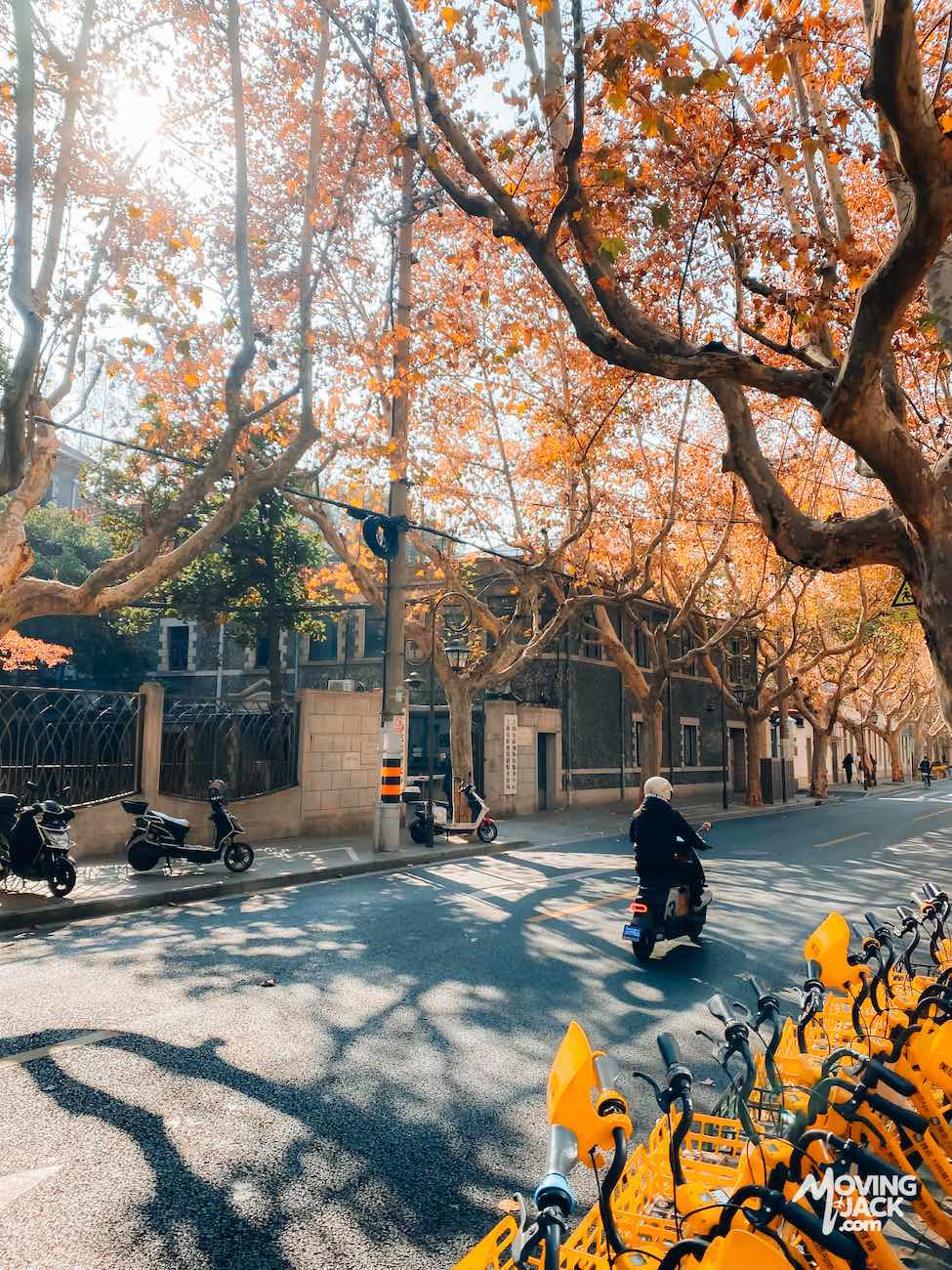
What to pack for China in fall is the easiest packing job. The best season for both Beijing and Shanghai. Cool, dry, blue skies, perfect weather. This is when most people travel.
What to pack:
- Light layers
- A medium jacket for evenings
- Comfortable walking shoes
- Sunglasses
- A small scarf for cooler mornings
- Light gloves for late November in Beijing
What to Pack for China in September
Still warmish, 18-28°C in both cities. Beijing has crystal clear skies. Shanghai pleasant.
What to Pack for China in October
The best month. 15-25°C, dry, clear. Peak tourist season for a reason.
What to Pack for China in November
Getting cool. Beijing starts dipping to 5-12°C, Shanghai stays milder at 10-18°C. Layers really matter.
What to Pack for China in Winter
What to pack for China in winter depends entirely on whether you’re going north or south. This is where Beijing and Shanghai really differ.
For Beijing in winter:
- Heavy down jacket (long, with hood)
- Thermal base layers (top and bottom)
- Warm hat, gloves, scarf
- Insulated waterproof boots
- Hand warmer packs (sold everywhere in China, or bring a few from home)
- A good moisturizer is essential because the dry air destroys skin. I always have this issue.
For Shanghai in winter:
- Medium jacket (waterproof helps)
- Warm sweaters for indoors (no central heating!)
- Closed-toe shoes
- Light gloves and scarf
- Layers, layers, layers
What to Pack for China in December
Beijing -10 to 5°C, often dry and sunny tho. Shanghai 3-10°C with damp cold.
What to Pack for China in January
Coldest month. Beijing can be -10°C with wind chill. Shanghai usually has temperatures around 0-8°C, but feels colder on your skin because of the humidity.
What to Pack for China in February
Chinese New Year crowds peak. Many shops closed. Cold continues but starts easing late in the month.
More China Travel Essentials
Here are a few other things you should know when traveling to China:
Taking Photos in China
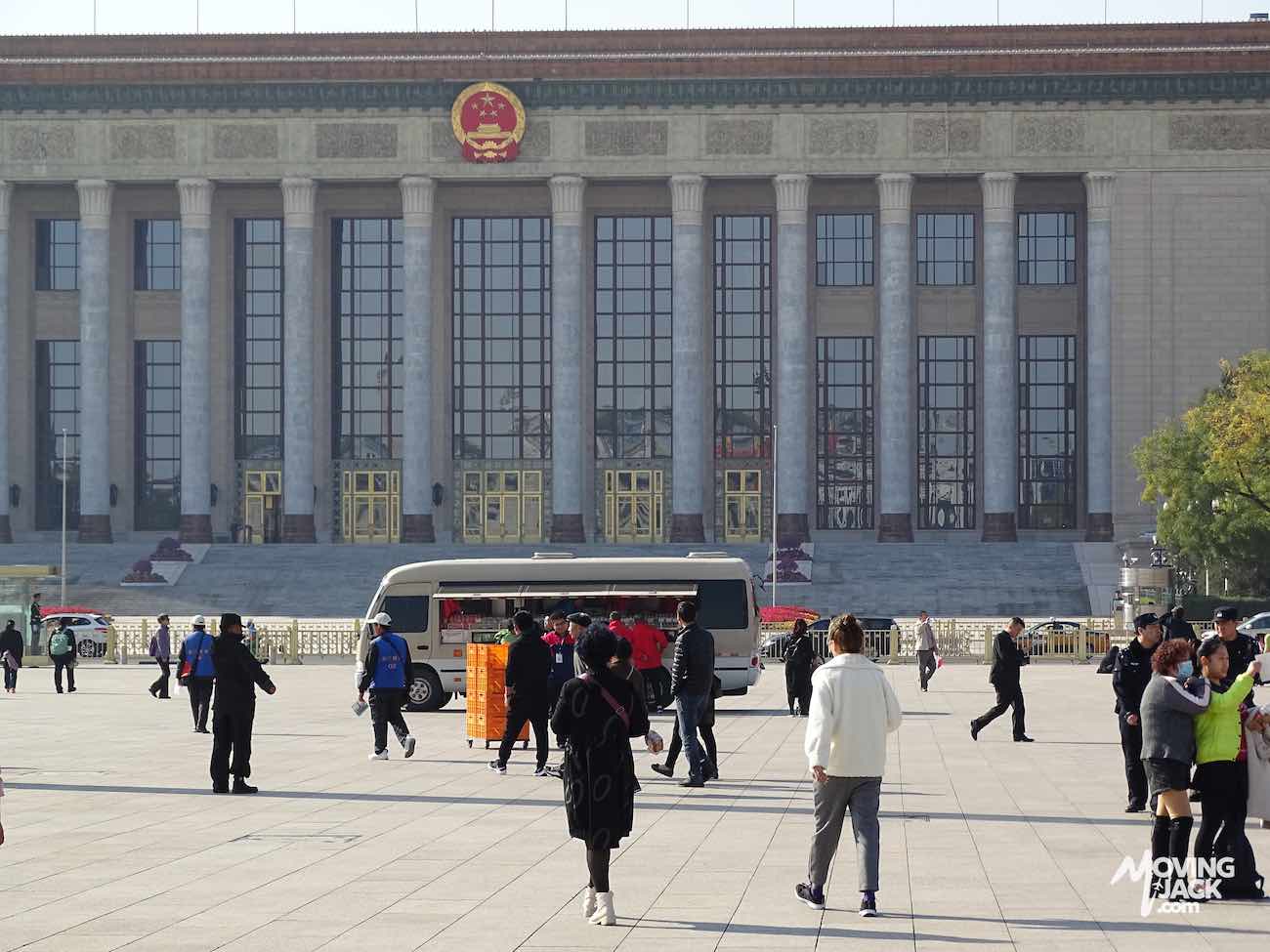
Don’t take photos of the military or government buildings, or police. Even walking with your camera in your hand in front of a government or police building will prompt a police officer to ask you to put away the camera. Just be aware. Tourist sites are 100% fine. Government buildings along Tiananmen Square are also fine in my experience; those are all tourist places.
How to Bargain at Chinese Markets
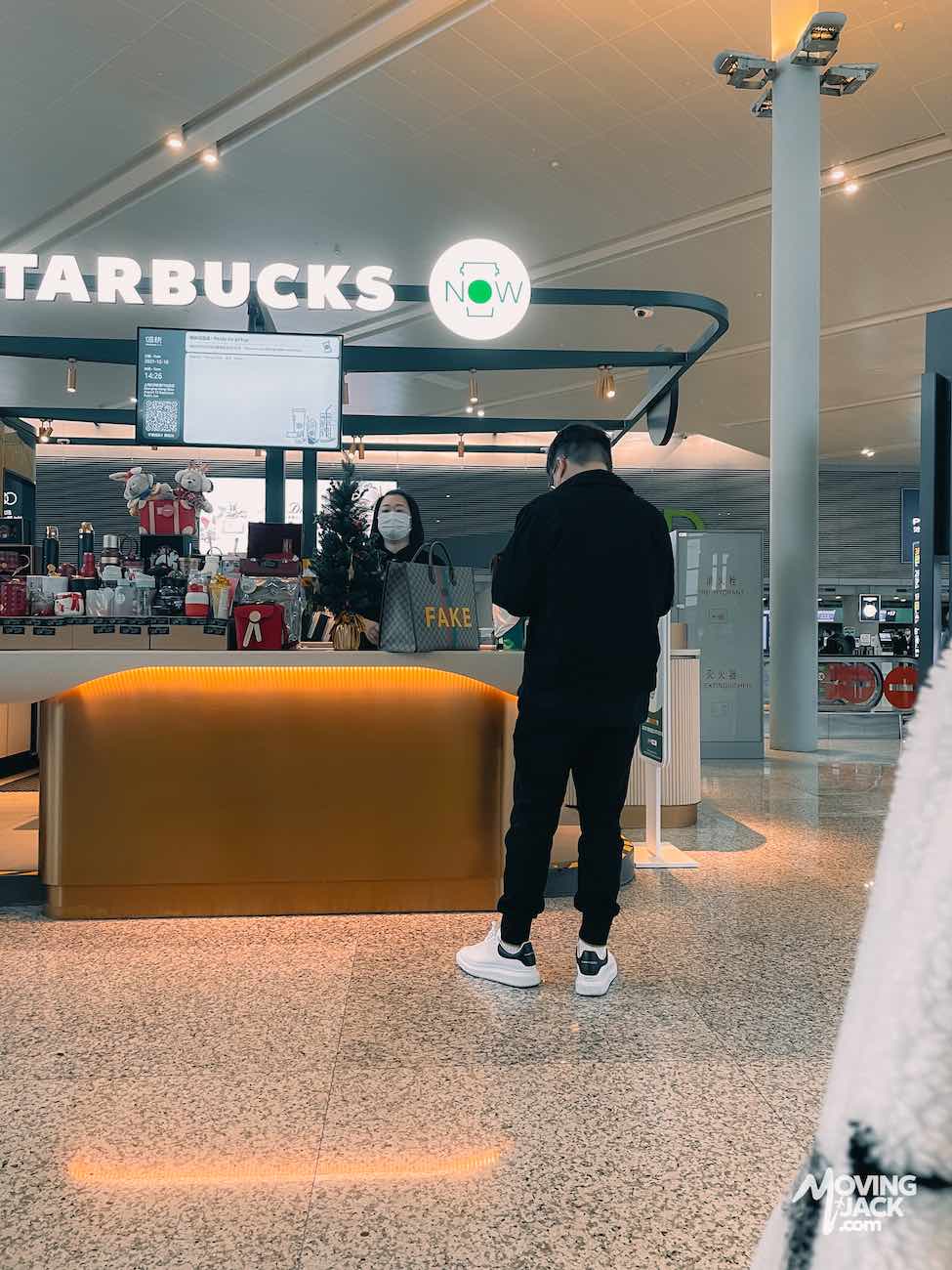
In markets like Beijing’s Pearl Market or Shanghai’s fake markets, bargaining is expected. Start at 30% of the asking price. You can walk away if they don’t budge. They’ll usually call you back. It’s part of the market, and it isn’t rude! Quick side note tho, China has been cracking down on fake goods at markets, it isn’t as easy anymore to just go in and buy a fake bag.
How funny is this image below btw, check the bag XD
Taking the High Speed Train in China
If you’re taking the high-speed train between cities (and you should, it’s amazing), a few things help:
- Book through Trip.com in advance
- Print or screenshot your ticket QR code
- Get to the station 30 to 45+ minutes early for security
- Bring snacks (train food is meh but sometimes they sell fresh made popcorn! Which I love)
What to Pack for Beijing
Beijing was my home for 2 years, and I have a lot of thoughts on what to pack for Beijing specifically. What to bring really depends on the season here, more than almost any other city I’ve lived in. Beijing is in northern China, which means dry and dusty air and brutal winters. The pollution is generally worse than in Shanghai. It has gotten much better in recent years. But you’ll still want to check Air Matters for real-time AQI before you go out.
The city is huge and spread out. The hutongs in the old parts of the city are charming but not as clean as the modern parts, so I would not go exploring them in flip-flops, even in the summer.
Good shoes really matter. The Great Wall, Summer Palace, and other big sights are outside the city center. You’ll have long days of walking.
Pollution Mask for Beijing (n95 or N99)
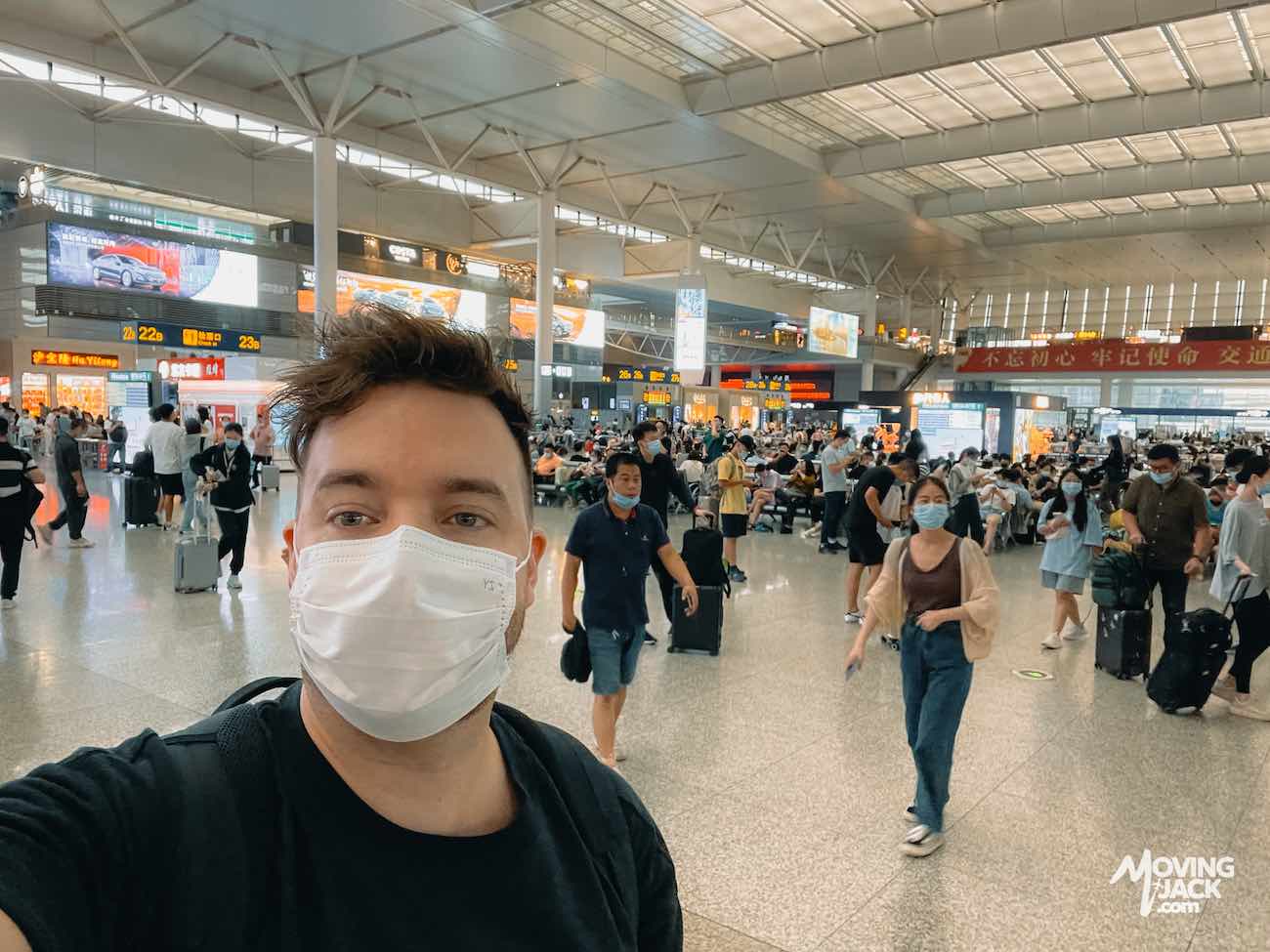
I lived through Beijing’s bad air days. They are not constant anymore, but on bad days, the AQI can really go above 200, sometimes 300+. On those days, I wore a mask outside. A real N95, not a fashion mask.
Most days, you don’t need one. But for 3-4 weeks per year, mostly in winter, it really helps.
Plus, if you get a cold, locals appreciate it if you wear a mask in public places. Please don’t sneeze in the subway without a mask…
What to Wear in Beijing Winter
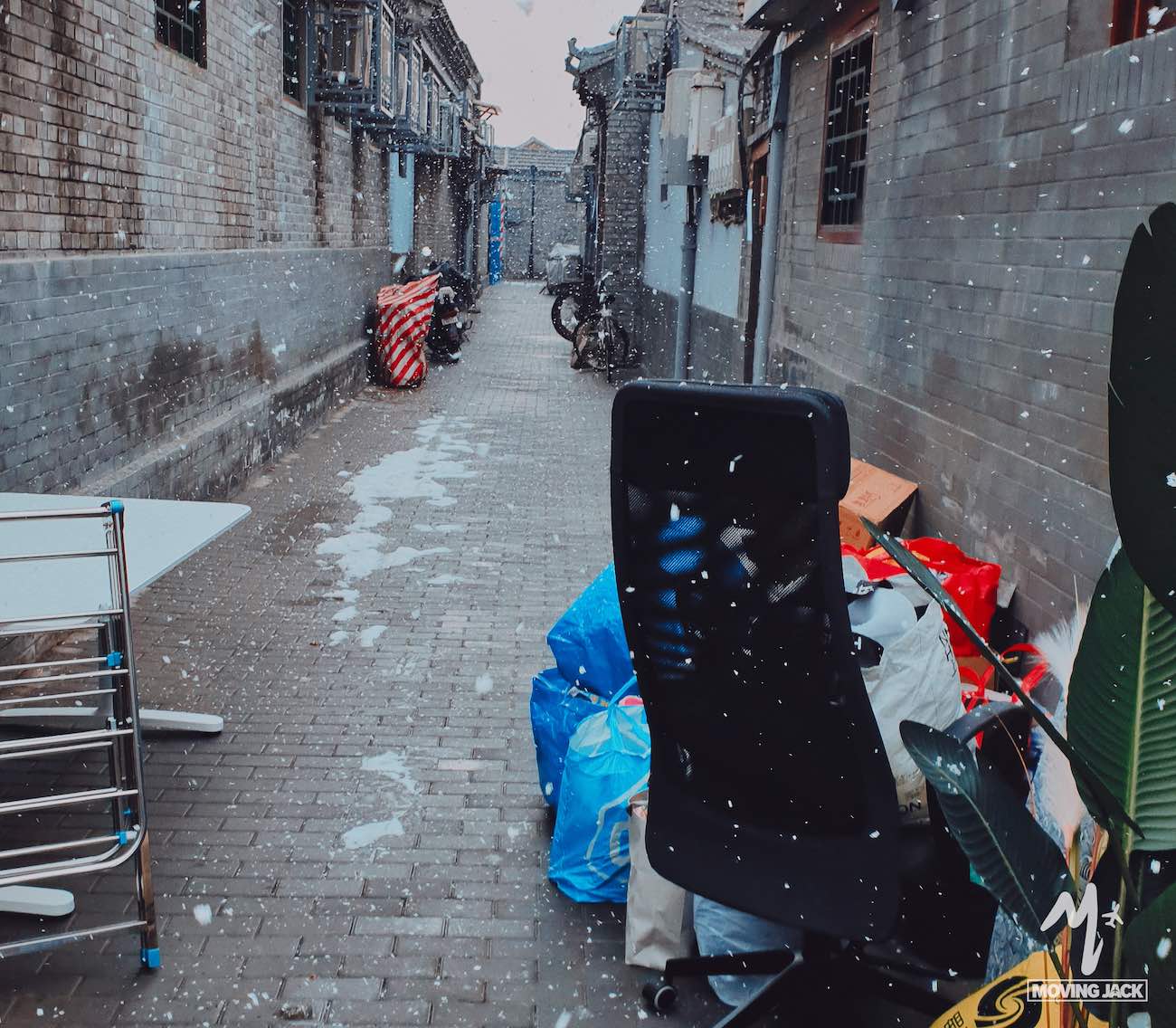
Beijing winter is no joke! I can know because I’ve lived through two of them, one while living in a hutong courtyard. We had no heater, and the floor would just hurt my feet instantly walking over it, so we needed two carpets on top of each other and wear big house slippers. Seoul can get really cold, like -18 °C, but Beijing was somehow more brutal in my experience.
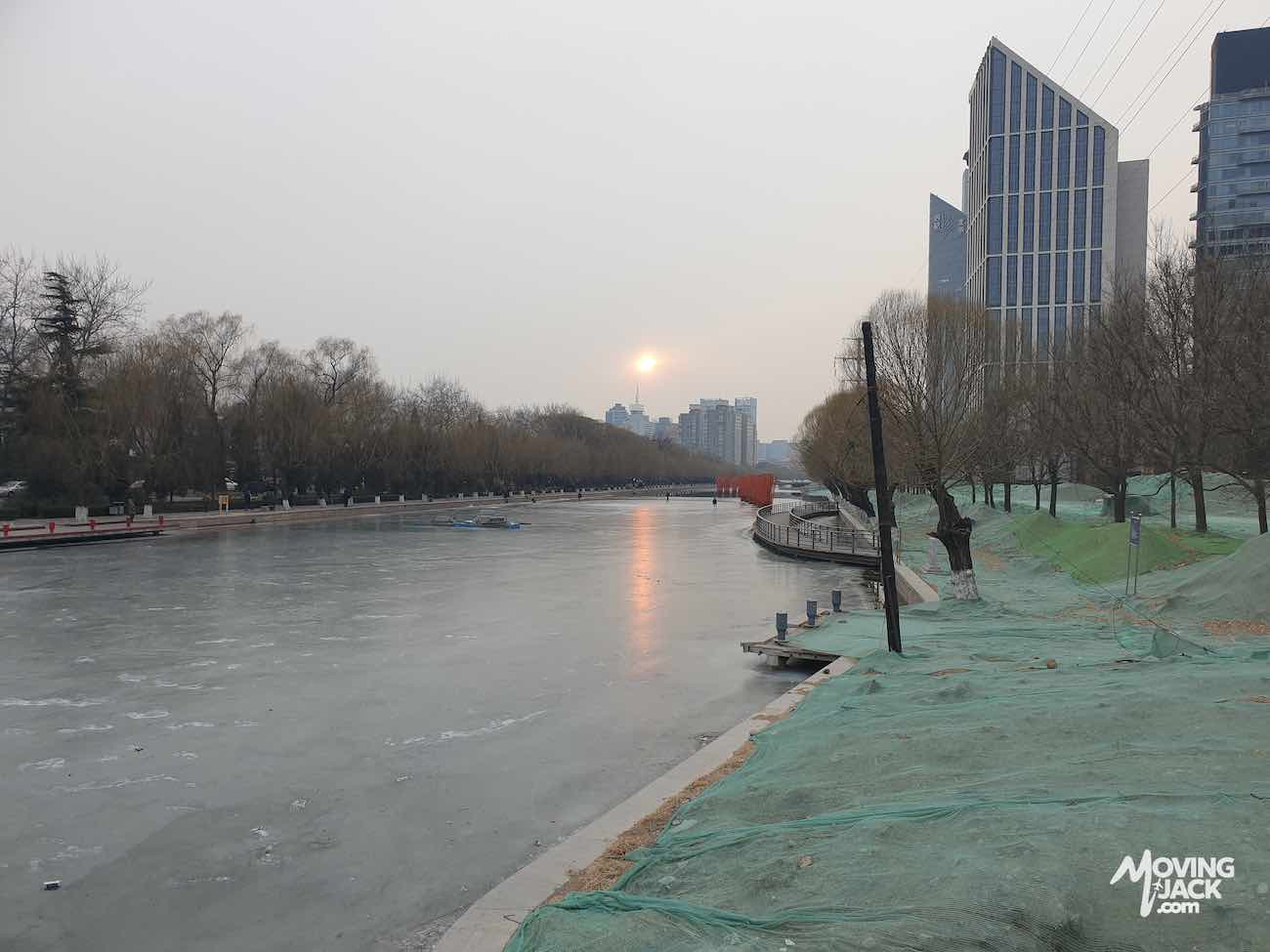
December through February can hit -10°C (14°F). The wind makes it feel even colder. You need:
- A heavy down jacket that’s long enough to cover your hips
- Thermal base layer. Uniqlo Heattech is what every expat I know wears
- Warm gloves and a real winter hat, not just a beanie
- A proper scarf to protect your neck from the wind
- Insulated waterproof boots if you’re going in January
The dry cold is different from the wet cold you might be used to in Europe. It cuts through everything. I underestimated this in my first winter and really regretted it. We actually moved to the hutong area right in the middle of winter, what we’re we thinking?!
Beijing Spring: Dust Storm Season
March and the beginning of April in Beijing can bring sandstorms that blow in from the Gobi Desert. The sky turns yellow-orange, the air gets gritty, and even healthy people can have a headache by the end of the day. A mask helps. So do glasses or sunglasses.
Best Shoes for Beijing
The hutong areas have really uneven stone paths and lots of small steps. Cute shoes don’t survive this. I always recommend sneakers or hiking-style walking shoes for Beijing specifically, especially in the hutong area. Don’t go on flip-flops exploring the hutongs, it’s not the cleanest part of China… Please wear shoes.
Best Time to Visit Beijing
September and October. The weather is dry, the sky is clear, and the temperatures are pleasant (15-25°C / 59-77°F). Spring is a dust storm risk. Summer is hot and humid. Winter is brutal but really beautiful, especially with snow on the Great Wall.
Thinking of visiting Beijing, check out my complete Where to Stay in Beijing Guide
What to Pack for Shanghai
I lived in Shanghai for 1 year after Beijing, and what to pack for Shanghai is different from Beijing. The weather is the opposite of Beijing in many ways. More humid, more rain, less extreme cold, but really sticky summers. Shanghai has a thing called the “plum rain season” (mei yu, usually mid June to mid July). It just rains for weeks. Like, weeks.
Rain Jacket for Shanghai
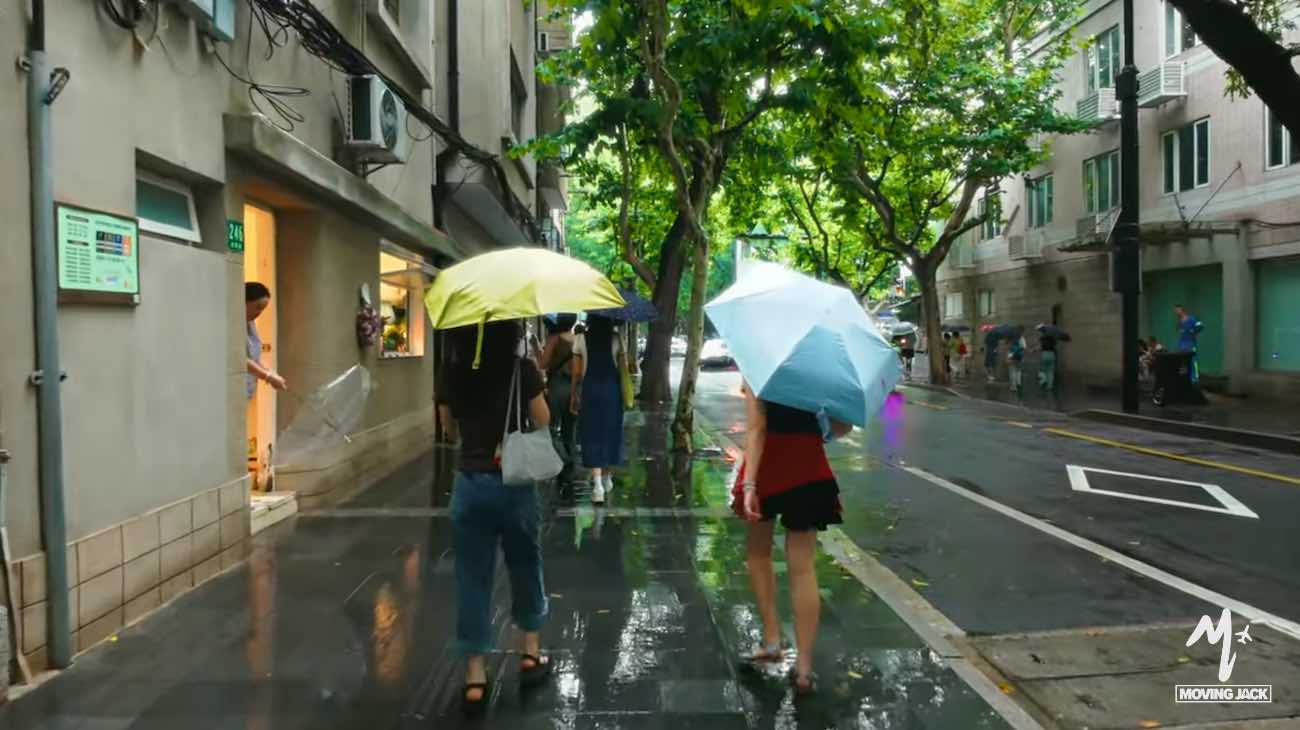
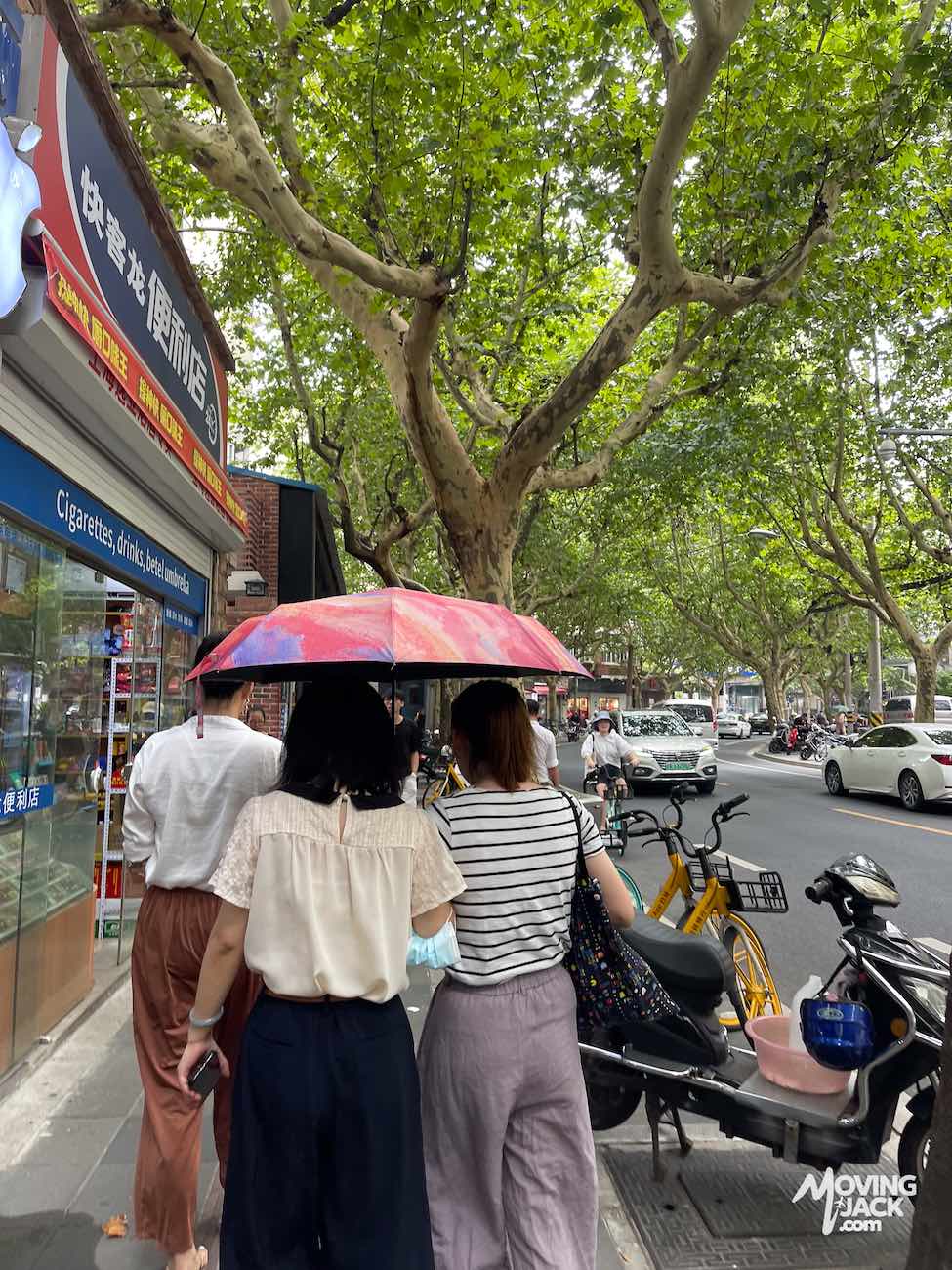
Shanghai rains a lot. In spring (especially March-April), in plum rain season (June-July), and in autumn. A small umbrella is fine for light rain. But a real waterproof jacket is way better when the rain is sideways, and the wind is blowing.
What to Wear in Shanghai Summer
Shanghai’s summer is quite humid. June through August can hit 35°C (95°F) with 80%+ humidity. You sweat just standing still. I lived through this for a full summer, and what worked was:
- Breathable shirts (the kind hikers wear)
- Loose linen or cotton pants
- Sandals, flip flops, or breathable sneakers
What to Wear in Shanghai Winter
Shanghai winter is not as cold as Beijing, but it’s a wet cold. Around 0-8°C (32-46°F) most of the time. The catch is that most older Shanghai buildings have no central heating. You might be colder INSIDE than outside. Bring warmer indoor clothes than you’d expect.
A light to medium jacket is fine. You don’t need the heavy Beijing winter coat for Shanghai unless you’re going inland.
Best Shoes for Shanghai
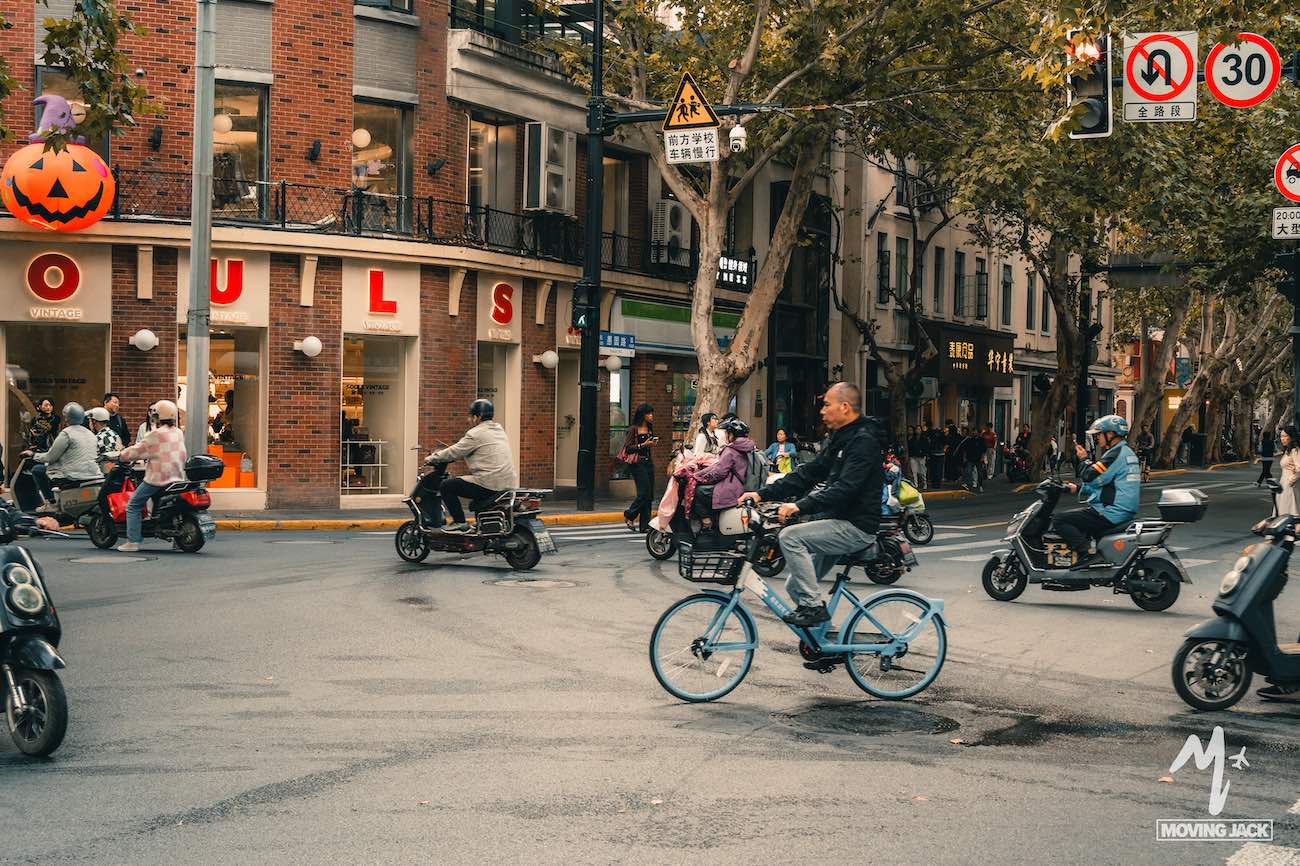
Shanghai is more walkable than Beijing because the neighborhoods are denser. But you’ll still walk a lot. The French Concession, the Bund, Tianzifang, Xintiandi, and the Jing’an district are all best explored on foot, or by Alipay rental bike, which is more fun!
Best Time to Visit Shanghai
October and November are the best months. Cool, dry, no plum rain, comfortable temperatures. Spring (April-May) is also nice but rainier. Summer is brutal, winter is cold, and lots of rain.
Thinking of visiting Beijing, check out my complete Where to Stay in Shanghai Guide
What NOT to Bring to China
What not to bring to China might be just as important! After 3 years living there, here’s what I learned:
Things You Shouldn’t Bring to China
- Of course, there’s the obvious stuff you see on signs at the airport, like lighters, cheese, fruit, meat, etc. Please don’t bring those. But they are also strict on flammable things like hand sanitizers! Yes, some of the hand sanitizers have alcohol, which is flammable, so there’s a good chance they will throw them away.
- Tea or instant coffee from home. China has the best tea on Earth, and Starbucks and Luckin Coffee are everywhere.
Things Banned or Restricted in China
This list matters. Some of these will get confiscated or cause problems:
- Drones without permits. China heavily restricts drones. Don’t bring one.
- GPS units for hiking. Treated similarly to drones, can cause issues.
- Large quantities of any one medication. Stick to a 30-day supply max in original packaging.
- Sleeping pills, ADHD medication, and strong painkillers. Many are restricted or illegal. Check before flying.
- Aerosol sprays in carry-on for domestic flights. Often confiscated. Pack in a checked bag.
- Power banks over 160Wh. Banned from carrying any luggage on Chinese airlines.
- Walkie-talkies or HAM radios. Restricted.
- Materials critical of the Chinese government. Books, magazines, and t-shirts with sensitive messaging.
Things You Won’t Need in China
- Tipping cash. Tipping is not really a thing in China. Save the money.
- Phrasebook from 2005. Pleco and Google Translate (with VPN) replace this.
- Cooking equipment. Restaurants are cheap, and supermarkets sell prepared food.
- Expensive jewelry. No point, you’ll just worry about it in crowded places.
Things You Don’t Actually Need to Bring
- Western brand toothpaste. Local versions work fine. Crest and Colgate are also widely sold.
- Shampoo and body wash. Every hotel provides it. If you’re picky, buy local options for a week.
- Snacks. China has incredible snacks. Just try the local stuff.
If you want to know the nitty-gritty of what not to bring, please check out the official customs website.
Frequently Asked Questions
-
In big cities, yes. H&M, Zara, Uniqlo, Nike, Adidas, all are common. But sizing is a bit different, and many times it’s called “Asian fit”, which is just smaller than in Europe and much smaller than in the US. Don’t expect to find oversized US-sized shirts.
Especially for women, finding the right clothing size is an issue in China and many other Asian countries. My wife always had trouble finding the right size, as most Westerners are taller. -
Hotel laundry is reliable but usually really expensive (50-100 RMB per item). I once had a friend who was visiting in Beijing who had no idea it was this expensive, he gave his entire bag of clothes and had to pay like 200 dollars…
-
Honestly, very. I felt safer walking around Beijing at night than in most US cities. Some say pickpocketing exists in crowded tourist areas, but I have not seen or heard anything about that in the 3 years I lived there. The one thing to keep in mind regarding safety is that almost all vehicles in China run on electricity, so they make almost no sound.
Please make sure to look at both sides carefully before crossing the road. Also, when walking on a pedestrian street, don’t just jump left or right without looking. There could be an electric scooter coming that you didn’t hear. -
You really need to set up Alipay and WeChat Pay. Foreign credit cards work in some hotels and international restaurants. But for daily life, like taxis, street food, and small shops, QR code payment is the way to go. Cash is a backup; luckily, ATMs can be found everywhere.
-
Yes. Unless you’re OK with no Google, Gmail, WhatsApp, Instagram, Facebook, or YouTube for your entire trip. Set up Astrill before flying. Or get an e-SIM by Airalo.
-
Yes, especially for longer trips or anything beyond the big cities. SafetyWing is a good budget option. International hospitals in Beijing and Shanghai can be expensive without insurance.
Final Thoughts & Tips
Packing for China is not really about gear. It’s about a few key decisions you make before you fly:
- VPN installed and tested
- Alipay and WeChat Pay set up
- Some cash on hand
- The right clothes for the season AND the city you’re visiting
- Pleco is installed for translation
The rest is just standard travel packing.
After 3 years living there, the thing that really makes the trip is going in prepared. China is incredible. The food, the history, the culture you see everywhere, the energy of cities like Shanghai and Beijing, and the kindness of the people you meet. But it’s also different enough from home that small things can throw you off if you’re not ready.
The good news is that once you have the basics, China becomes one of the most rewarding places on the planet to travel. The Forbidden City, real dumplings, the Great Wall, and there are so many things that will just blow your mind. China lives both in a historic past and in the future. You’ll see robots delivering food, cars you’ve never seen anywhere else, drone shows, buildings that are lit up by vast LED screens, and the next-level convenience of it all. Those are the moments that stick with you for a lifetime! My wife and I still regularly talk about all those ‘China moments’.
Anyway, pack smart, set up the apps, bring an open mind, and you’re going to have an incredible trip! Enjoy! And if you have any questions, please feel free to reach out.