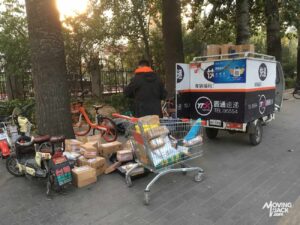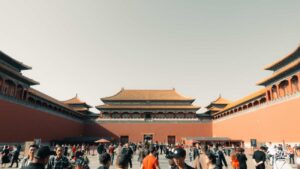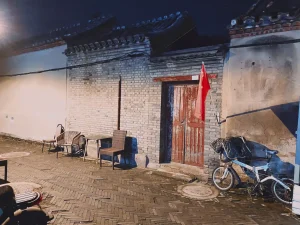



Looking for where to stay in Beijing? I lived in Beijing for 2 years. The first year in a modern apartment in Chaoyang, the second year in a traditional hutong courtyard house just below the famous Lama Temple.
Beijing is massive, but with this guide you’ll know exactly which neighborhood fits your trip and which hotel to book.
Let’s go! Or as they say in China: 走吧 (zǒu ba)!
The best area to stay in Beijing is Dongcheng / Wangfujing for first-timers, it’s within walking distance to the Forbidden City, Tiananmen Square, and Beijing’s historic center. Hutong courtyard hotels near the Drum Tower offer the most authentic local experience.
QUICK ANSWERS
- Best for first-timers and families: 1. Dongcheng / Wangfujing area. Walking distance to the Forbidden City, Tiananmen Square, and hutongs. The most central location with the most cultural sights.
- Best for a local experience: 2. Hutong area (Gulou / Drum Tower). Traditional courtyard houses, hidden bars, local restaurants, and the most authentic Beijing experience. This is where I lived my second year.
- Best on a budget: 3. Qianmen. Still central, more affordable than Wangfujing, traditional, very local, but different than the hutongs.
- Best for an easy experience: 4. Sanlitun. International restaurants, bars, and Western hotel brands. The least “Chinese” area but the easiest to adjust to.
- Best for luxury: 5. Guomao. This is where the famous rectangular CCTV building is. It’s a modern area with malls, skyscrapers, and so on, somewhat like Shanghai’s financial district. It’s impressive but less authentic Chinese.
- Best for Shopping and escaping the Hutong Chaos: 6. Xi Dan. Not the most exciting area, but great for shopping and still close to the major attractions.
- My personal recommendation: Stay in the hutong area near Gulou if you’re up for an authentic experience, or in Dongcheng/Wangfujing for convenience and easy access to most of Beijing’s sights and activities.

Where to Stay in Beijing for Tourists
Here are the 6 best areas to stay, based on two years of living in this city.
1. Wangfujing – Most Central
Where to stay in Beijing for first-timers? Around Wangfujing is the area I’d recommend. You can walk from there to famous places like the Forbidden City, the Temple of Heaven, Tiananmen Square, and Zhengyangmen (underrated but cool).
Tip: Wangfujing is a famous shopping street right next to the Forbidden City, Tiananmen Square, and the entrance to the hutong neighborhoods.
Wangfujing is a famous street in the Dongcheng area. This area is on the right of the Forbidden City and is huge. There are malls that are great for shopping (and using the toilet, because the public toilets in the hutongs are… well, not everyone’s cup of tea.)
But staying around Wangfujing is great for first-time visitors to Beijing because most of the famous attractions are within walking distance.
It’s the most popular area for tourists. However, you won’t see that many Western tourists! Most tourists come from within China. China still remains a bit of an unknown territory for many outsiders.
You can walk to the Forbidden City in 10 to 15 minutes from most hotels here.
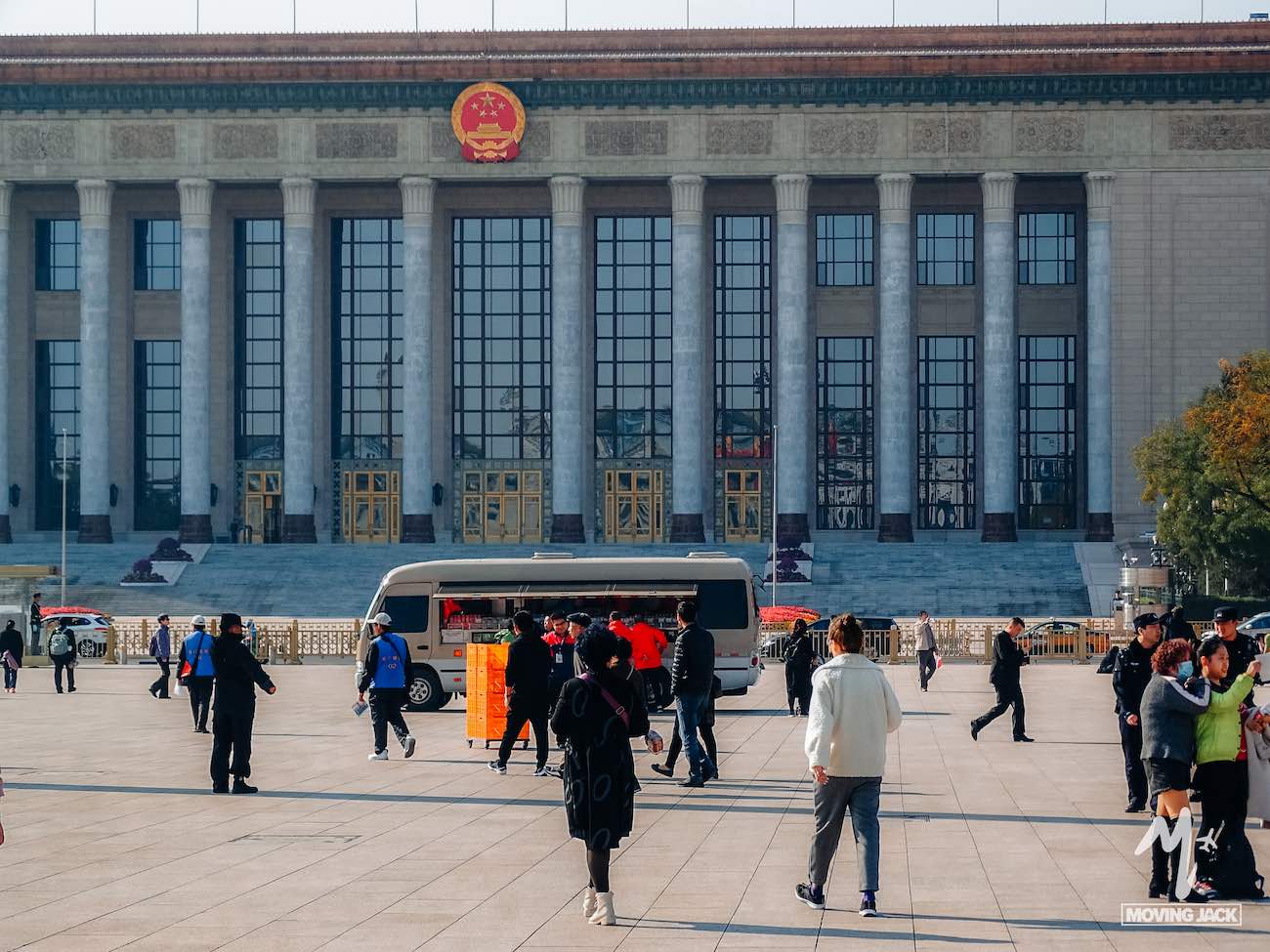
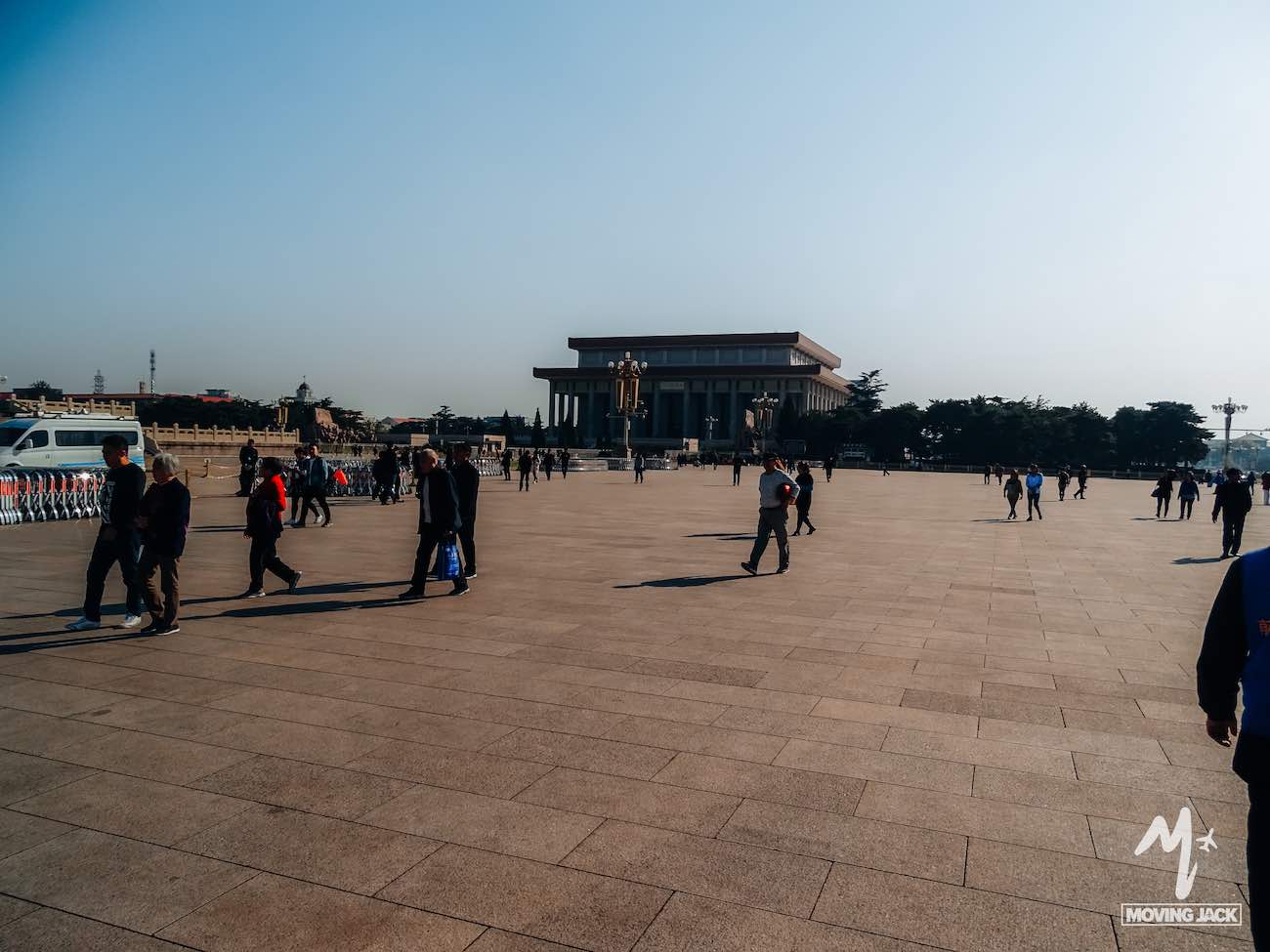


Tip: The Forbidden City and Temple of Heaven require advance booking online. You can't just show up and buy tickets at the gate anymore. Please check the official website . It takes a bit of figuring out how to buy tickets (as many things in China takes some time to figure things out...)
The downside is that it’s the most popular part of Beijing. Wangfujing Street itself is packed with shops, food stalls, odd smells from unfamiliar food, and not much Western food in sight. I love it, but you might experience a bit of culture shock.


Where to stay around Wangfujing
Here are my favorite hotels around Wangfujing:
The Legendale
The Legendale Hotel is a classic, luxurious, and still affordable hotel right at the center of it all in Beijing. You can walk to Wangfujing, Tiananmen Square, the Forbidden City, and everything else.

Happy Dragon Saga Hotel
A bit more local and authentic Chinese experience is the Happy Dragon Saga Hotel. It’s only two streets further away from the Forbidden City, but it’s also more affordable. Friends of mine stayed here a few days and loved it, especially the friendly and helpful staff.
Best for: First-time visitors, families, and anyone who wants to be close to the Forbidden City.
Things to do nearby: Forbidden City (walking distance), Tiananmen Square, Jingshan Park (best views of the Forbidden City from above), Wangfujing shopping street, Wangfujing food stalls, National Museum of China.
Getting around: Metro Line 1 (Wangfujing Station) or Line 5 (Dengshikou Station). Walking distance to most central attractions.
DONGCHENG HOTEL TIPS
- Book a hotel on a side street off Wangfujing for better prices and less noise.
- Check if breakfast is included. Western-style breakfast options are more common at international chain hotels in this area.
2. Hutong Area / Gulou – Most Local
This is where I lived during my second year in Beijing, and although there were many inconveniences, I loved it. A traditional courtyard house in a hutong near the Lama Temple. I could really smell the incense from my house during the weekend. Some days, my wife and I went for a run around the Forbidden City. How incredible is that? It was one of the best living experiences of my life.


The hutong area around the Drum Tower (Gulou) is old Beijing. Locals sit outside playing games, kids run through the alleys, and hidden behind unmarked doors, you’ll find some of the best cocktail bars and cafes in the city.
This area has changed a lot in recent years. Many hutong courtyard houses have been converted into boutique hotels and guesthouses. Staying in one is an experience in itself. Low ceilings, traditional Chinese interior, and courtyards with trees. You don’t feel at all like you’re in a city of 21 million people.

Staying in a hutong hotel is charming but not modern. The rooms can be small. Heating in winter is a real issue, and they often don’t have floor heating (Beijing drops to -10°C, and the old buildings don’t insulate well). The streets can be chaotic and dirty. But if you can be open-minded about that, you’ll have an experience that no five-star hotel can give you.
Staying here will give you a total culture shock, mark my words. Here are some of my experiences:
- Streets can be dirty, like really dirty
- Public toilets are just open, and inside you can see folks going number 2 without any doors
- Hygiene isn’t always optimal at local restaurants and supermarkets
- The smells are strong and often indescribable in the streets
- Traffic is more chaotic than in other areas
- Old folks walking in pajamas and spitting on the ground is a common sight
- One time, we found little living scorpions inside an old bar while having a drink
- Ferrets walked the rooftops. And you can see random things like a dog sitting on a roof

In short, it can be a bit much. And even despite all these odd things, I loved living there. I was immersed in a different culture, unlike anywhere else in the world.
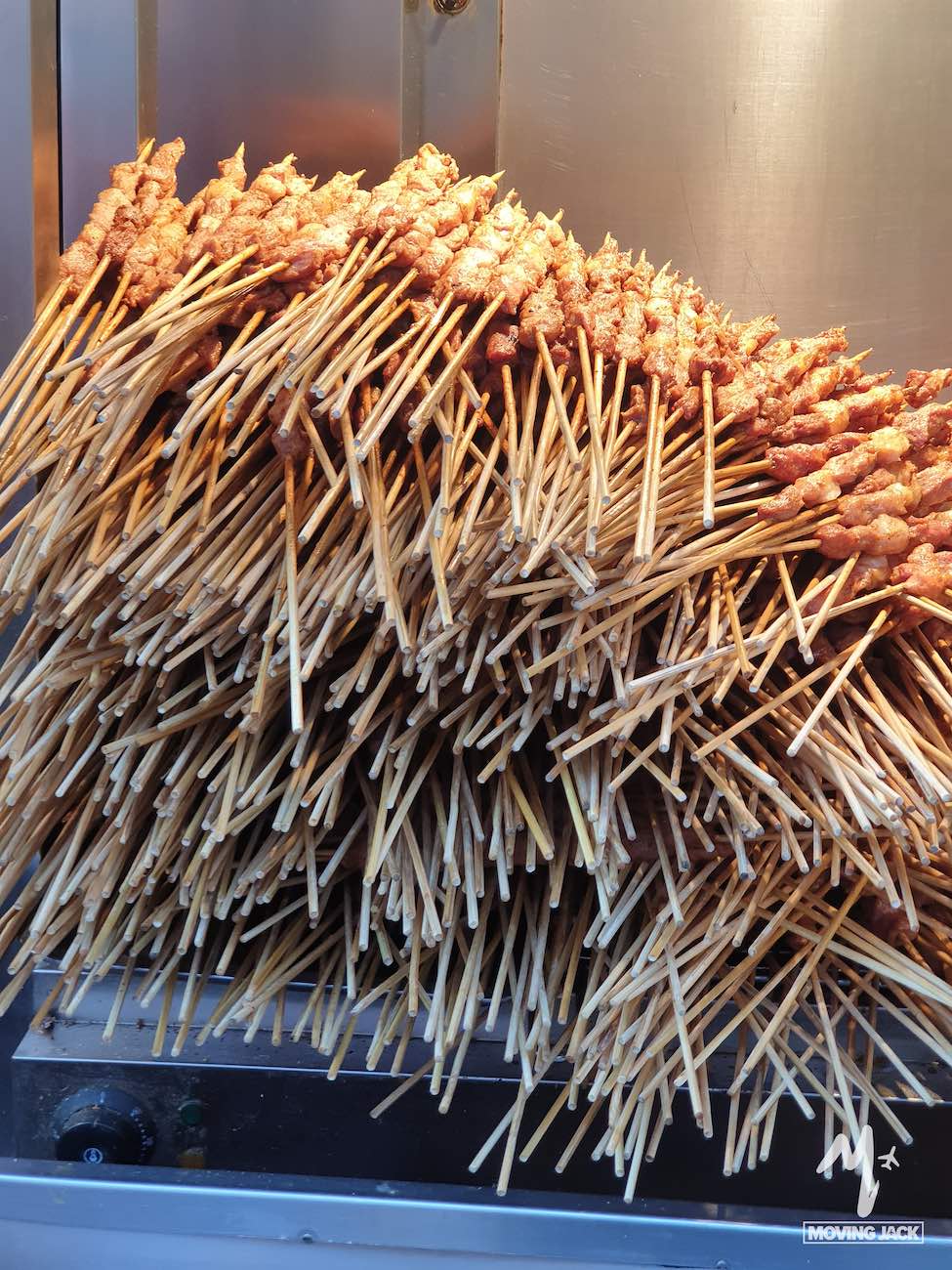

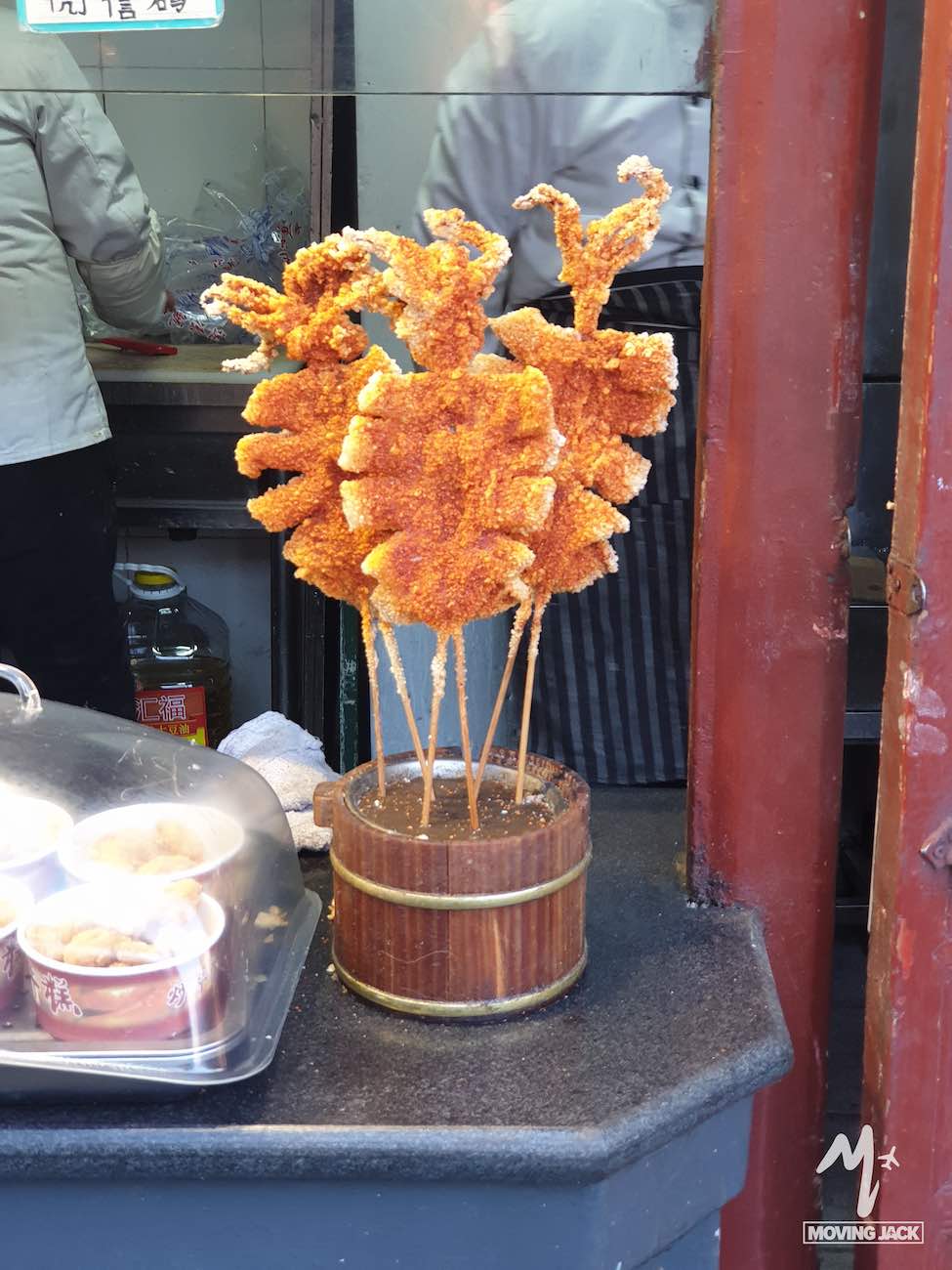
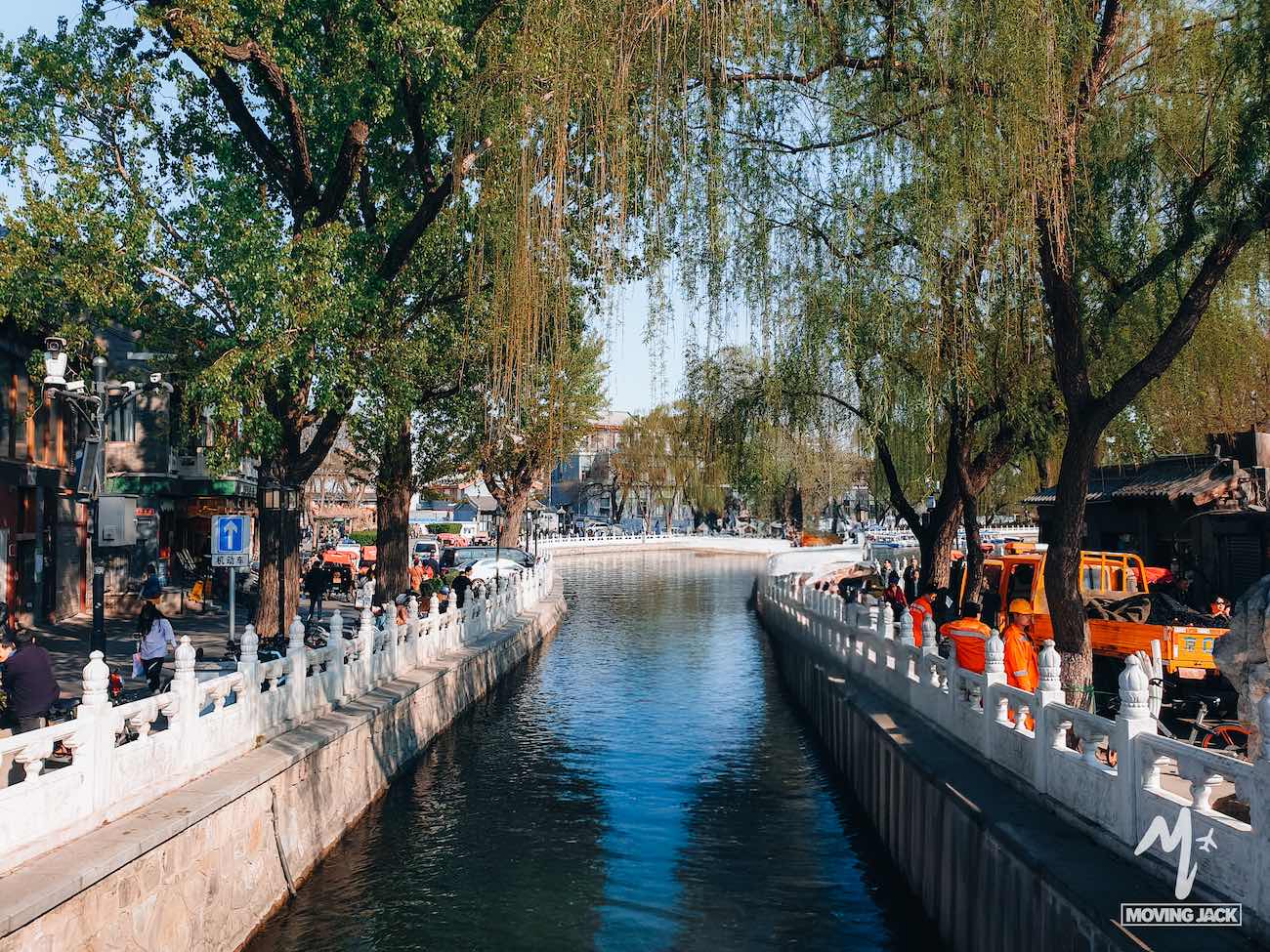
There’s also Houhai, a beautiful lake surrounded by a huge amount of things to do and see, it can be crowded there, but it’s totally part of the experience.

Here’s a video where I walk through the hutongs to get a good sense of what it’s like:

Where to stay in Gulou
The hutong area around Gulou is quite a big area, here are my favorite hotels to stay:
Beijing Lezai Nanluo Countyard Hotel
One of the best places to stay for an authentic hutong experience is the Beijing Lezai Nanluo Countyard Hotel. I lived a few streets away from this place (on Bei Xin Hu Tong street) for over a year, and it’s right in the center of the hutong area.

It’s a totally authentic guesthouse vibe, but it’s an official hotel (meaning you don’t have to register at the police, which saves you a bit of hassle).

The Orchid
The other hotel I can highly recommend is The Orchid. I’ve had lunch here, I guess, over ten times, and the building is beautiful. I had a look at the rooms, and it’s such a stylish design. And the contrast between the ancient structures and the modern design is simply beautiful.

It’s a bit more expensive than the Nanluo Courtyard Hotel, but the experience is even more epic. The Orchid is a place where we have had lunch countless times.
Best for: Anyone who wants to feel what old Beijing is actually like. I really recommend staying here for a once-in-a-lifetime experience. Unless you’ll come back for more Beijing, which I’m sure you will! 😉
Things to do near Gulou
Drum Tower and Bell Tower (climb for rooftop views over the hutongs), Lama Temple (one of Beijing’s most impressive Buddhist temples), Confucius Temple, Houhai Lake (bars, restaurants, ice skating in winter), Nanluoguxiang (popular hutong shopping street — touristy but fun), Beihai Park, Ditan Park.
Getting around Gulou
Metro Line 2 (Guloudajie Station) or Line 5 (Lama Temple Station). The hutong alleys themselves are best explored on foot or by bike.
➡️ Read my full guide to living in a Beijing hutong
HUTONG HOTEL TIPS
- Expect smaller rooms than modern hotels. That’s part of the charm.
- Ask about heating if you’re visiting in winter. Some older properties have only electrical heaters
- Don’t expect room service or hotel restaurants at most hutong stays.
3. Qianmen – Central and Traditional
Qianmen is just below Tiananmen Square. The main Qianmen Street is a pedestrian shopping area with older architecture and a mix of local shops and restaurants.
This is actually the area where I stayed with my wife the first time we came to China in January 2019. We booked the Great Emperor Hotel for 2 weeks. Within those first 2 weeks, we had to find a house! Crazy, but we did it. A house agent drove us around the city, and we ended up on the north side of Chaoyang.
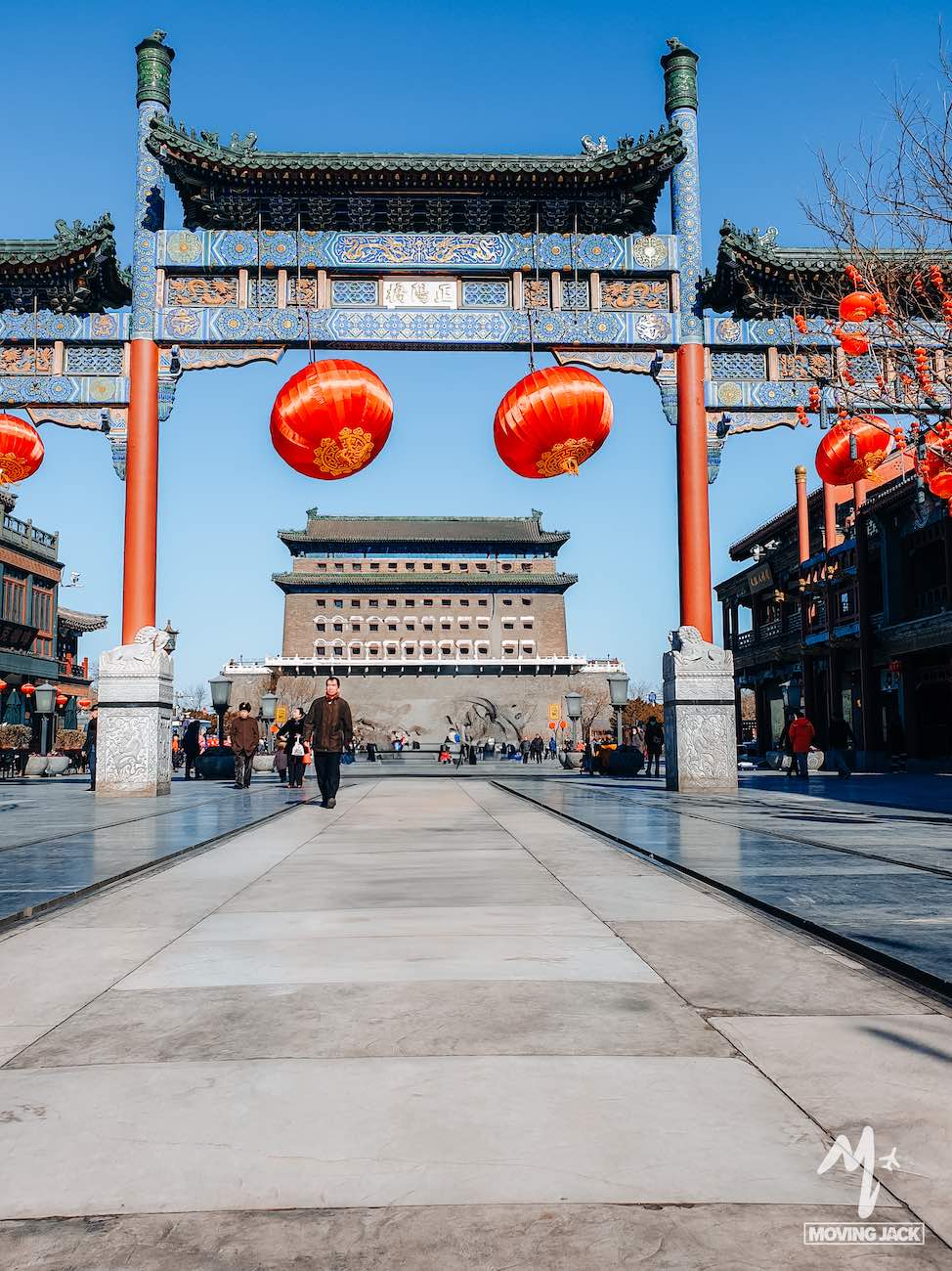
But anyway, Qianmen is a good compromise between location and chaos. Less touristy than Wangfujing, more accessible than the hutong area, and generally more affordable.
Personally, I would still go for around Wangfujing because it is a bit more central, but both are fine options.
Where to stay in Qianmen
M Hotel is right behind Beijing’s historic city wall, Zhengyangmen. Step outside the hotel, and you’re right at the heart of traditional China. We stayed at the Emperor Hotel in the Qianmen area, but unfortunately, it no longer exists. Stayed there for two weeks when we arrived in January 2019!
Best for: Budget-conscious travelers, people who want central access without the Wangfujing tourist feel.
Things to do nearby: Tiananmen Square (walking distance), Temple of Heaven (short metro ride or 15 to 20 minute walk depending on where you stay in the area), Qianmen shopping street, Dashilar historic area, traditional Beijing restaurants.
Getting around: Metro Line 2 (Qianmen Station). Walking distance to Tiananmen and the Forbidden City south entrance area.
QIANMEN HOTEL TIPS
- Good value area. Hotels are cheaper than those in Wangfujing but are still well-located.
- More boutique options than international chains.
- Good base if you want to visit Temple of Heaven early in the morning (which I’d recommend — locals do tai chi and dancing in the park at dawn, and it’s special to see).
4. Sanlitun – Modern
If you want nightlife, international food, and the comfort of familiar hotel brands, Sanlitun is your area. It’s Beijing’s most international neighborhood, centered around Sanlitun Bar Street and the Taikoo Li shopping complex.


You’ll find beer breweries, cocktail bars, international restaurants (Mexican, Italian, Japanese, you name it), and a lively atmosphere that’s alive until late. The big Western hotel chains are here: InterContinental, Bvlgari, Four Seasons. The area attracts expats, business travelers, and younger tourists.
The downside: Sanlitun doesn’t feel very Chinese. It’s about 30 minutes by metro from the Forbidden City and the historic center. If you want to experience the cultural side of Beijing, you’ll be on the road a bit.
That said, I understand why some people choose it. Beijing can be intense if it’s your first time in China. The language barrier, the different food, and the way things work here. Sanlitun gives you a softer landing, so to speak.
Best for: Nightlife seekers, business travelers, first-time China visitors who want familiar comforts.
Things to do nearby: Sanlitun Bar Street, Taikoo Li shopping, Chaoyang Park, 798 Art District (about 15 minutes by taxi, a converted factory complex with galleries and studios — worth a visit).
Getting around: Metro Line 10 (Tuanjiehu Station) is the closest. Sanlitun itself is walkable, but you’ll need the metro or Didi for major sights.
Where to stay in Sanlitun
SANLITUN HOTEL TIPS
- This is where you’ll find the best luxury hotel deals. A Four Seasons room in Beijing costs way less what it costs in New York or London. If you’ve ever wanted to try a top-end hotel, China is perfect.
- Hotels here tend to be newer and more modern than in the historic center.
- If you want bars, restaurants with a more Western touch stay within walking distance of Sanlitun.
5. Guomao – Financial District
I lived in Chaoyang my first year in Beijing. We also wanted to do a soft landing and not jump into the traditional Chinese way of living right away. Chaoyang is basically the entire right side of the city, seen from the Forbidden City. The area I lived is called Wangjing, close to the 798 Art District.
The building we moved to after two weeks of house hunting, after just arriving in Beijing:

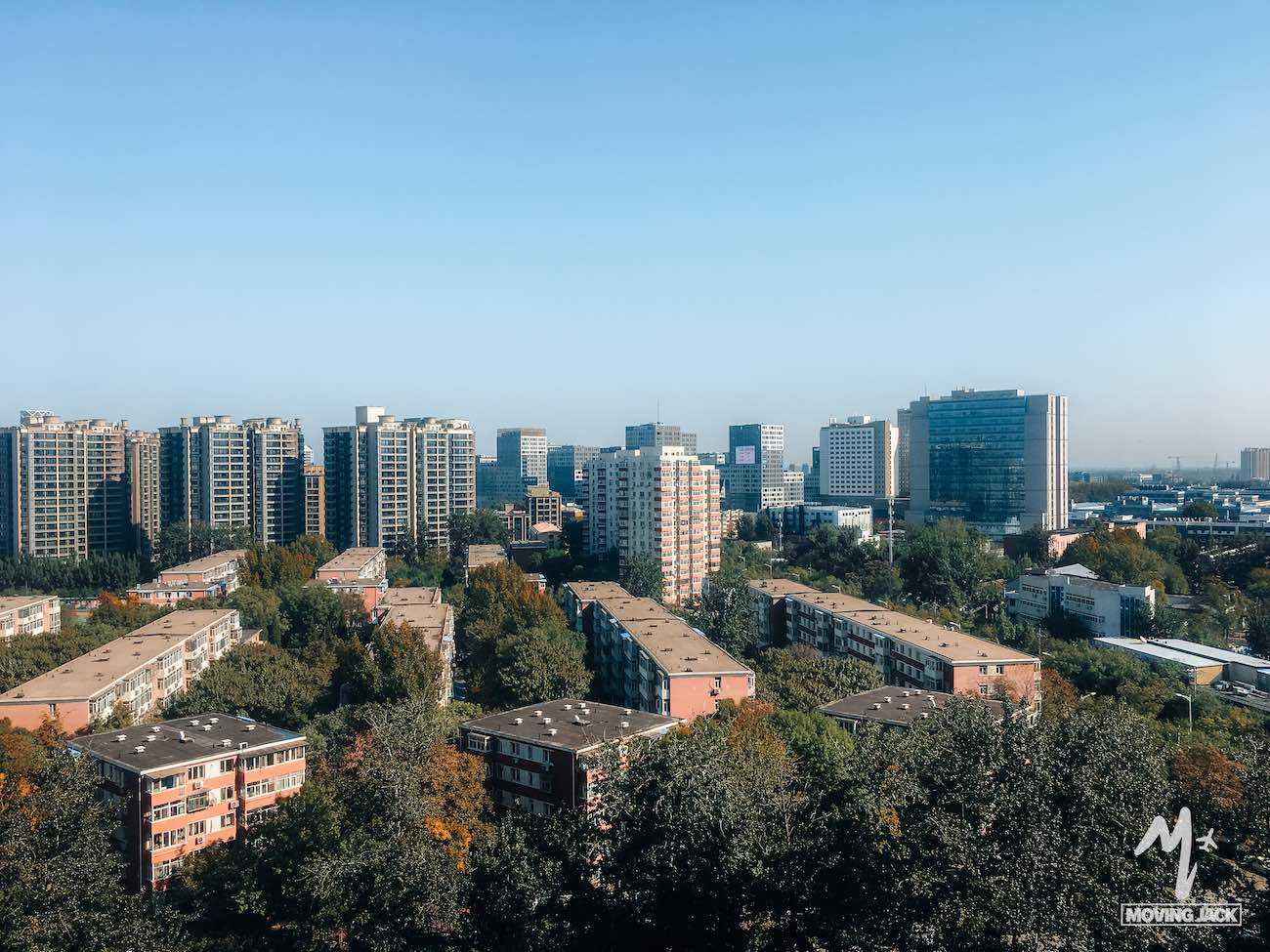

Guomao is at the center of Chaoyang and is a modern business district with skyscrapers, office towers, shopping malls, and a very different feel from the historic center.

It has the famous CCTV building. Which was designed by German and Dutch designers, Rem Koolhaas and Ole Scheeren!
There’s also the impressive Zun Tower (its odd shape is inspired by an ancient Chinese wine carafe).
For tourists, Chaoyang is fine but not ideal as a base unless you don’t mind taking a taxi. The main sights are 30 to 45 minutes away by metro. You’ll spend more time on the road than if you stayed in Dongcheng or the hutong area.

Some blogs don’t recommend staying around Guomao, but I wouldn’t go that far. I can imagine that on a trip or holiday, you’d want some convenience, like Western restaurants, and also to see cultural sights, but not to be immersed 24/7 in a chaotic culture shock.
Where to stay in Guomao
Guomao is all about luxurious stays. Here are my favorites:
JEN Beijing
JEN Beijing is an incredible hotel where I used to go often for dinner and drinks. It’s right across the impressive CCTV building and within walking distance of the subway that goes straight to Wangfujing. So it’s not even that inconvenient to stay here. Plus, you’ll have all the Western options.
Best for: Business travelers, people who prioritize modern hotels and don’t mind commuting to sights.
Things to do nearby: 798 Art District, Chaoyang Park, Olympic Park (Bird’s Nest), CCTV Tower, Zun Tower, Galaxy SOHO.
Getting around: Metro Lines 1, 6, 10, and 14 all run through Chaoyang. The CBD area is well-connected.
CHAOYANG HOTEL TIPS
- Modern hotels with good amenities. International chains.
- Prices vary a lot. The CBD (Beijing Central Business District) area is more expensive. Further east is cheaper.
- If you’re staying here, make sure you’re near a metro station. The distances in Chaoyang are quite big!
6. Xidan – Shopping District
Xidan is on the west side of the Forbidden City and is less well-known than the other areas. It’s a commercial district with lots of shopping malls, basically a huge street just for shopping. I used to come here a lot.

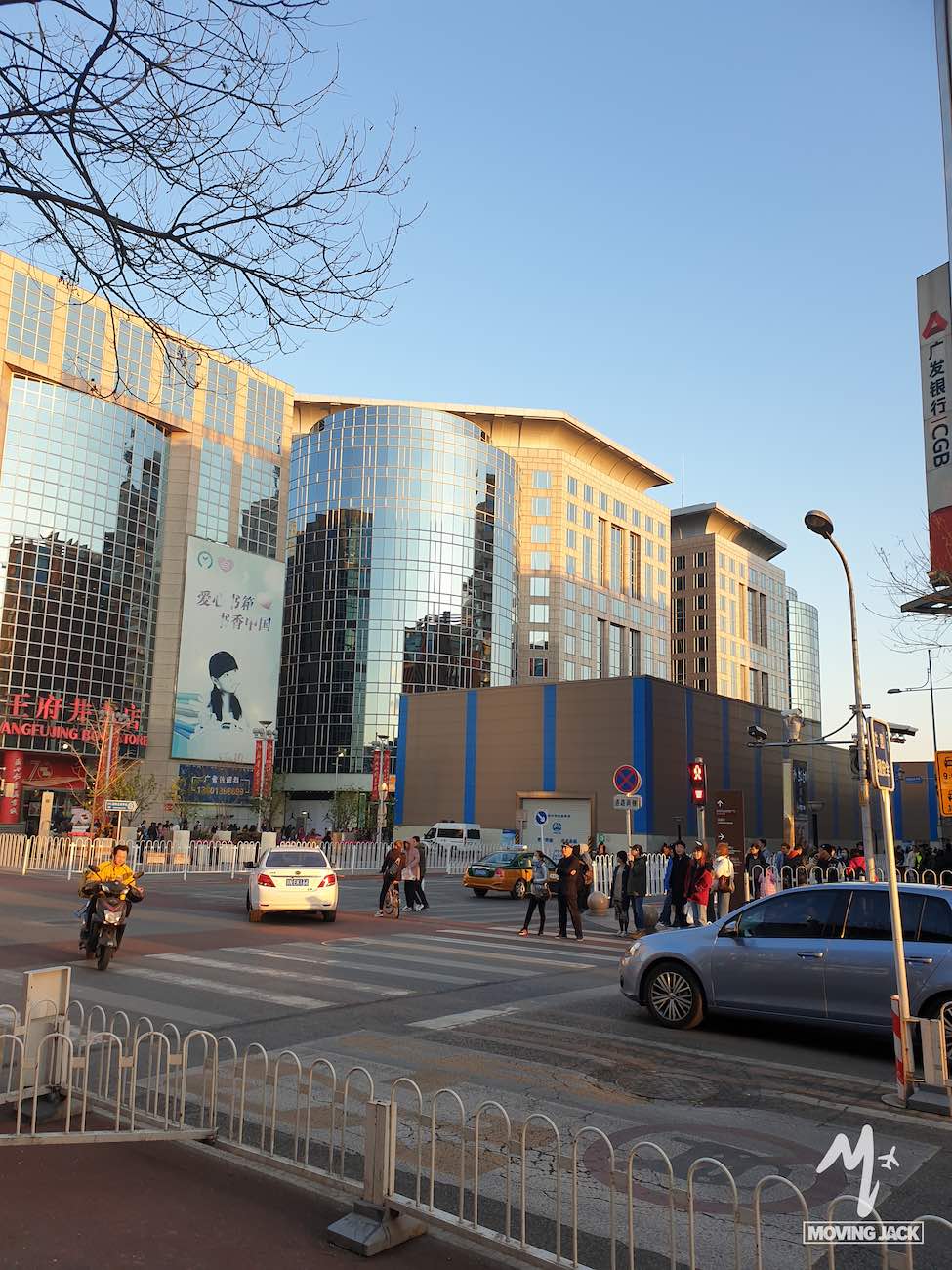
It’s not the most culturally rich area, but it has some advantages: it’s great for shopping, hotels are a bit more affordable, and it’s still close to the Forbidden City and other sights. But it’s a bit harder to explore on foot, except for the shopping part.

Where to stay in Xidan
Grand Mercury is a fine budget-friendly choice to stay near Xidan. Pan Pacific is another option that’s a bit more expensive, right at the center of Xi Dan. As I said, it’s not the most exciting area of Beijing, but it’s a good compromise of convenience and staying close to all the big attractions.
Best for: People who want to shop and escape the hutong chaos.
Things to do nearby: Xidan shopping area, easy metro access to the Forbidden City and the Temple of Heaven.
Getting around: Metro Lines 1 and 4 (Xidan Station).
Where Not to Stay in Beijing
After 2 years in this city, there are a few areas I’d steer visitors away from:
Haidian District (university Area)
It’s far from the tourist sights, and while it has universities and tech companies, there’s not much reason for a tourist to be here. Yes, the Summer Palace is there, which is a must-visit if you have time, but you should just make that a day-trip.


Far Eastern Chaoyang or Tongzhou.
These are outer suburbs. Cheap hotels, but an hour or more from anything you’d want to see. Not worth the savings. It’s where I lived, but it’s too far to stay on a trip.

Near the train stations (Beijing Station, Beijing West, Beijing South). The areas immediately around the train stations are busy, noisy, and not particularly pleasant. Fine for one night if you have an early train, but don’t stay your whole trip there. It’s a better choice to stay in Qianmen than.
Guesthouses or Airbnbs
It’s perfectly fine to stay in an Airbnb, but I wanted to add this here because it’s different than staying in a hotel. Staying in a guesthouse or Airbnb means you have to register yourself within 24 hours after arriving at the nearest police station. Sometimes the Airbnb host will help you tho.
The process is very simple, but I dare to bet that nobody at the police station can speak English (although they are super kind and will go out of their way to help you, at least in my experience, and I’ve been there a lot). It’s a bit of a hassle, especially for first-time visitors. I recommend just staying at a hotel; they register you automatically, you don’t have to do anything, just show your passport.
Best Hotels in Beijing for 2026
If you don’t want to read through all the neighborhoods and just want me to point at 3 hotels, here they are. One luxury, one mid-range, one budget. I have personally stayed at all three across different trips while living in China.
1. Legendale Hotel Wangfujing (luxury Pick)
Right in the middle of Wangfujing, 5 minutes walk to the Forbidden City and the main shopping street. From $150/night. 9.1/10 on Booking.com. The European-palace style is something you really do not see anywhere else in Beijing or even in China; chandeliers, marble lobby, the whole thing feels more like a museum than a hotel (in a good way!).
I would say this is the hotel I would book if it is your first time in Beijing and you want to wake up walking distance from the Forbidden City. The location is perfect.
2. Lezai Nanluo Courtyard Hotel (mid-range Pick)
This hotel is in the Gulou hutongs where I lived for over a year (during Covid btw…!), 8 minutes walk to Nanluoguxiang and the Drum Tower. From $140/night. 9.7/10 on Booking.com. This is an actual restored Chinese courtyard (siheyuan) you sleep around a small inner garden instead of in a regular hotel room.
I really enjoyed staying here because it feels like you are actually in old Beijing. You step outside the gate, and you are in a narrow hutong alley with locals doing their morning thing. After staying here, we really wanted to live in a hutong, which is what we did for over a year!
3. Qianmen M Hotel (budget Pick)
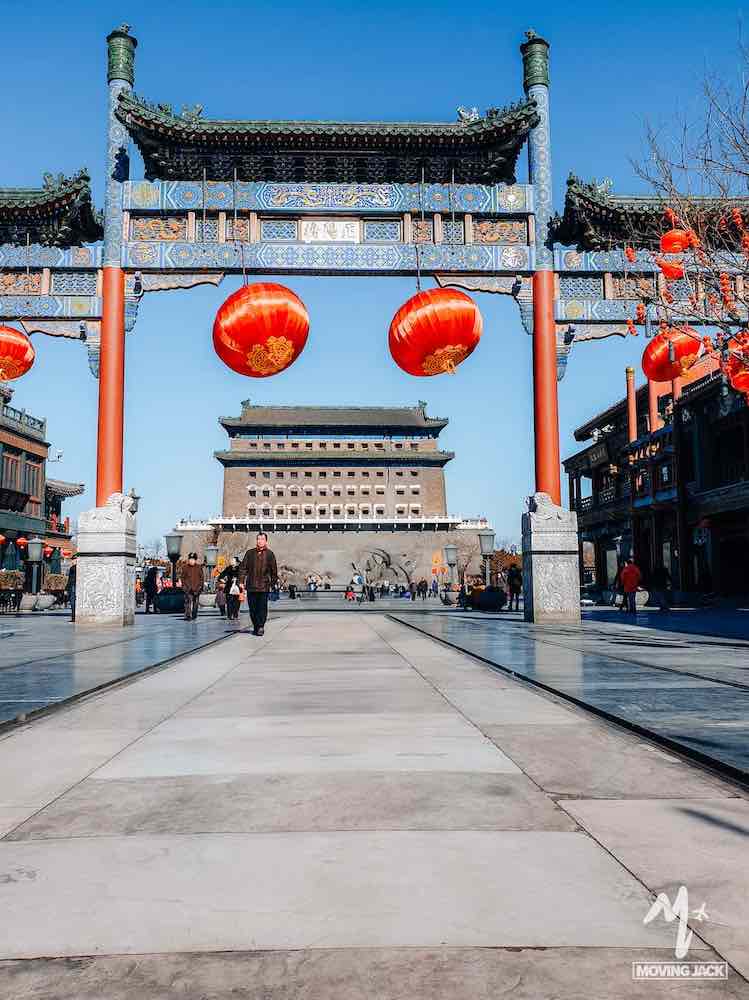
From $85/night, right next to Qianmen Street and a 10-minute walk to Tiananmen Square, 8.3/10 on Booking.com. Clean, modern rooms with a really good central location, which is honestly hard to find in Beijing at this price.
What surprised me about this one is how walkable everything is. Tiananmen, the Forbidden City, and the Qianmen pedestrian street are all within 15 minutes on foot. For a budget hotel, that is really nice.
Location: 9.8!
What Should You Know Before Booking a Hotel in Beijing?
After living here for 2 years and spending nights at various hotels, here’s what I learned:
Hotels and Families
I moved to Beijing with my wife, so I know what it’s like to get around the city as a couple. For families with kids, here’s what I’d recommend:
Stay in Dongcheng or Wangfujing. It’s the safest bet for families. Wide sidewalks, close to main attractions, and the most international hotel options with family rooms. Beijing is an extremely safe city for families. Crime is very low. The main challenges are the language barrier and the unfamiliar food. And it isn’t always easy to find “coffee and a sandwich” or even just regular bread.
That said, Beijing is spacious, and going to the Temple of Heaven, the Forbidden City, and Tiananmen Square means kids can run around without having to look out for cars or anything. If you have a stroller, the hutong alleys with uneven ground can be tricky.
Getting Around Beijing
Beijing’s metro is clean, safe, and covers the city well. Signs are in English and Chinese. A single ride costs ¥3 to ¥7, depending on the distance.
Taxis and Didi are very cheap. A ride across the city is usually under ¥50 (about $7). Use Didi to avoid language barriers.
Tip: Taxi drivers can be hit or miss sometimes. You can have a driver who drives smoothly and calmly, and you can have one who constantly hits the brakes and gets lost. Try to check on the app where you're going.
A hotel near the Forbidden City saves you hours over a 3-day trip compared to staying in Chaoyang. Alipay bikes are available all over the city. Great for exploring hutong alleys and parks. Make sure you connect your credit card to Alipay.

Best Time to Visit Beijing
Spring (April to May) and fall (September to November) are the best times. Nice temperatures, better air quality, and way fewer crowds than in summer.
Summer (June to August) is hot, and can have poor air quality. It’s also peak tourism season.
Winter (December to February) is cold. Really cold! similar to Seoul, it drops to around -15°C (5°F).

Avoid: Chinese New Year (late January/early February) and Golden Week (first week of October). Everything is crowded, and train tickets are all sold out. Please avoid Golden Week.
Tip: Deciding between Beijing and Shanghai? Shanghai is modern, international, and polished. Beijing is raw, historic, and more culturally Chinese. Staying in Shanghai feels a bit like staying in Paris or New York. Beijing feels like China.
Essential Hotel Tips for China
Hotels in China are a bit different from what you might be used to. A few things to know:
- Set up Alipay before arriving. Many hotels accept international credit cards, but everything outside the hotel is paid for with Alipay or WeChat Pay. Connect your credit card to Alipay before you go.
- Download a VPN before entering China. Astrill works best. Google, Booking.com reviews, WhatsApp, and Instagram are all blocked without it. Or get an Airalo eSIM, which includes VPN.
- Hotel wifi doesn’t bypass the firewall. Don’t assume the hotel has a workaround.
- Passport required at check-in. Chinese law requires hotels to register foreign guests. Bring your passport. Most hotels make a copy.
- Breakfast at Chinese hotels is different. Breakfast is usually really good at most hotels, lots of Western food, but if you’re going for a bit more budget option, expect congee, steamed buns, pickled vegetables, eggs, and noodles.
- Hot water, not cold. Water dispensers in hotels serve hot water. This is normal in China. Cold bottled water is available at convenience stores.
THINGS I WISH I KNEW BEFORE MY FIRST NIGHT IN BEIJING
- The air quality varies a lot day by day. Download an air quality app (IQAir) and check before going out. On bad days, wear a mask outdoors.
- Beijing is dry. Much drier than Shanghai or Seoul. Bring some moisturizer.
- Beijing tap water is not drinkable. Use bottled water or the hot water dispensers at hotels.
- Street food in Beijing is great but very different from Shanghai. Try jianbing (crepes), lamb skewers, and jiaozi (dumplings) from street vendors, those are my favorites.
- The Forbidden City and Temple of Heaven require advance booking online. You can’t just show up and buy tickets at the gate anymore. Please check the official website . It takes a bit of figuring out how to buy tickets (Like many thing in China things just take some time to figure it out)
- Learn to say “Qing wen” (excuse me / may I ask) and “Duo shao qian” (how much?). These two phrases plus “xie xie” will cover most interactions. And if you really want to go for it say 太贵了 (Tài guì le), which means: thats too expensive!
For more insider tips on what to know and what to bring and pack for Beijing, check out my complete packing guide.
Frequently Asked Questions
-
Dongcheng / Wangfujing area. It’s the most central, walkable, and has the easiest access to the Forbidden City and Tiananmen Square. If you’re comfortable with something more adventurous, the hutong area near the Drum Tower is more authentic and memorable.
-
Very safe. I lived there for 2 years and never felt unsafe at any point. Beijing has extremely low crime rates and cameras everywhere. The main safety concerns are air quality (check daily) and traffic when crossing streets.
-
Not by Western standards. Hotels are actually cheaper than in most major cities, even cheaper than in Shanghai. Local food is very affordable, especially in local restaurants. The subway is cheap. A trip to Beijing costs way less than the same trip to Tokyo, Seoul, or any European capital.
-
Beijing has less English than Shanghai. Hotel staff at international chains speak some English, but you’d be surprised that even at international brands, you will have to use a translation app. Download Baidu Translate and have your hotel address written in Chinese characters.
-
Yes. Same as all of China. Google, WhatsApp, Instagram, Facebook, YouTube are all blocked. Get Astrill VPN or an Airalo eSIM before you arrive. If you get the eSIM from Airalo, you don’t need a separate VPN.
-
Sanlitun for bars and clubs. The hutong area is for hidden cocktail bars and a more local experience.
Final Thoughts
Beijing is all about traditional Chinese culture. It’s a city that gave me the biggest culture shock when we arrived. But it’s a destination that you will talk about for many years to come. I can guarantee that every day you will see things that will amaze you. Unlike many other cities in the world that are just ‘cities’, Beijing is different.
Beijing can be beautiful, but it can also be very grey and ugly; it can be dirty but also very clean; it’s cold, hot, authentic, and weird, and everything in between.

Plan Your Trip to Beijing
- Flights: Skyscanner — best price comparison for China routes
- VPN: Astrill — essential, buy before entering China
- eSIM + VPN: Airalo — easiest option, works from day one
- Hotels: Booking.com — biggest selection
- Tours: GetYourGuide — Great Wall tours, Forbidden City tours, food walks
- Insurance: SafetyWing — what I use for long-term travel
Save it so it's ready when you need it.